
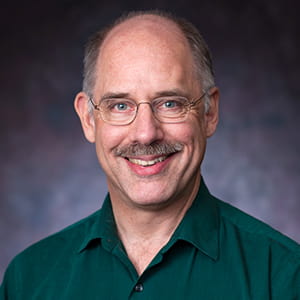
Anthony Ahrens Professor Psychology
- Degrees
- PhD, Psychology, Stanford University
BA, Psychology, Mathematical Methods in the Social Sciences, Northwestern University - Bio
-
My continuing interests include gratitude and mindfulness, especially the relation of gratitude to the desire to be independent of others. I also have two relatively new interests. (1) Non-Buddhist contemplative practices. Many ancient traditions have forms of contemplation, and those outside the Buddhist tradition seem to me understudied. My student Milly Curlee and I have a first paper on the Ignatian Examen, an exercise developed by Catholicism’s Jesuits, accepted into press at Journal of Positive Psychology. (2) Moral psychology: (a) I have become interested in the integration of social cognitive theory and virtue theory. A grant is permitting me to do initial empirical work on this topic. A previous grant from the Templeton Foundation allowed me to write a paper, published in Social and Personality Psychology Compass, arguing for that integration. (b) My student Ryan Smout and I are beginning to study the consequences arising from witnessing others violating our sense of morality.
My interests, and the work of the lab, are described in more detail at my lab page, the Emotions and Positive Psychology Lab. https://www.american.edu/cas/psychology/eppl/
- See Also
- Psychology Department
- Emotions and Positive Psychology Lab
- For the Media
- To request an interview for a news story, call AU Communications at 202-885-5950 or submit a request.
Teaching
Spring 2024
-
PSYC-205 Social Psychology
-
PSYC-450 Psychology of Well-Being
-
PSYC-899 Doctoral Dissertation
Fall 2024
-
PSYC-100 Introduction to Psychology
-
PSYC-335 Psychology of Religion
Scholarly, Creative & Professional Activities
Research Interests
Dr. Ahrens’ research is focused on contemplative science, especially non-Buddhist practices, and moral psychology, especially virtue theory and moral injury. He also has coninuing interests in autonomous interpersonal style, gratitude, and mindfulness.
Honors, Awards, and Fellowships
- American University, Award for Excellence in Master’s Student Mentoring, 2017
- Outstanding Reviewer Award, Journal of Happiness Studies, 2009
- American University, University Faculty Award for Outstanding Service to the University Community, 2007
Professional Presentations
-
Cohen, A. I., & Ahrens, A. H. Autonomous interpersonal style, depressive symptoms, loneliness, and COVID-19 prevention activities. Association for Behavioral and Cognitive Therapies, online, November 2021.
-
Smout, R., & Ahrens, A. H. Everyday moral injury: Can MI result from common violations in the workplace? Association for Behavioral and Cognitive Therapies, online, November 2020.
-
To, C., Spitzen, T., Mhoon-Mock, W, & Ahrens, A. H. Daily gratitude diaries and changes in interpersonal variables. Society for Personality and Social Psychology, New Orleans, 2020.
-
Curlee, M., & Ahrens, A. H. Examen spiritual exercises and self-transcendent positive emotions. Society for Personality and Social Psychology, New Orleans, 2020.
- Mhoon-Mock, W., & Ahrens, A. H. Uncertainty avoidance and the perceived utility of low arousal positive emotions. Presented at the Association for Behavioral and Cognitive Therapies convention, Washington, DC, November 2018
- Mhoon-Mock, W. & Ahrens, A. H. The differential effects of gratitude “to” vs. gratitude “for” exercises. Presented at the Society for Personality and Social Psychology convention, Atlanta, GA, March 2018.
- De Simone Irace, C., Spitzen, T., & Ahrens, A. H. Are one’s relationships about exchange? Then daily gratitude is less likely to increase trait gratitude. Presented at the Association for Behavioral and Cognitive Therapies convention, San Diego, CA, November 2017.
Selected Publications
-
Curlee, M. S., & Ahrens, A. H. (in press). An exploratory analysis of the Ignatian Examen: Impact on self-transcendent positive emotions and eudaimonic motivation. Journal of Positive Psychology.
-
Parker, S. C., & Ahrens, A. H. (in press). (Just thinking of) uncertainty increases intolerance of uncertainty. Journal of Individual Differences.
-
Cloutier, D., & Ahrens, A. H. (2020). Catholic moral theology and the virtues: Integrating psychology to illuminate moral disagreement. Theological Studies, 81, 326-347.
-
Ahrens, A. H., & Cloutier, D. (2019). Acting for good reasons: Integrating virtue theory and social cognitive theory. Social and Personality Psychology Compass.
-
Stewart, K. L., Ahrens, A. H., & Gunthert, K. C. (2018). Relating to self and other: Mindfulness predicts compassionate and self-image relationship goals. Mindfulness, 9, 176-186.
-
Parker, S. C., Majid H., Stewart, K. L., & Ahrens, A. H. (2017). No thanks! Autonomous interpersonal style is associated with less experience and valuing of gratitude. Cognition and Emotion, 31, 1627-1637.
-
Ahrens, A.H., & Forbes, C. N. (2014). Gratitude. In M. M. Tugade, M. L. Shiota, & L. D. Kirby (Eds.), Handbook of positive emotions. (pp. 342-361). New York: Guilford Press.
- Carlin, E., & Ahrens, A. H. (2014). The effects of mindfulness and fear-inducing stimuli on avoidance behavior. Mindfulness, 5, 276-281.
Grants and Sponsored Research
-
Templeton World Charities Foundation, ‘Character development and adolescent health: An Evaluation of the impact of traditional storytelling on improving sexual and reproductive health education outcomes.’ (PI), 2020-2022
-
Templeton Foundation, “Integrating Social Cognitive Theory and Virtue Ethics,”Co-Principal Investigator (David Cloutier PI), 2016-2018
-
R21 National Cancer Institute, “Applying Self-Regulatory Focus Theory to Cigarette Smoking Cessation,” Co-Investigator (David Haaga, PI) 2002-2004
- R03 National Institute of Mental Health, "Mood, Recall, and Changes in Attributional Style." 1992-1995
AU Experts
Area of Expertise
Gratitude, depression, fear of emotion, mindfulness
Additional Information
Anthony Ahrens focuses on gratitude, mindfulness, and fear of emotion. His work on gratitude focuses on two topics. Most research defines gratitude as a reaction to benefits received from others. Ahrens believes that, in addition, some individuals report gratitude for benefits for which there is no clear origin: Some report being grateful for being at the beach on a sunny day, though they might not report being grateful toanyone. He has data using a trait measure of this sort of gratitude, e.g., in response to specific subsequent daily events. Ahrens is interested in the relation of gratitude to the sense of being interconnected. He is also interested in mindfulness. Several researchers have found that mindfulness techniques assist in preventing relapse into depression and in treating for depression. Ahrens is interested in examining the mechanisms by which mindfulness exerts its effects.
For the Media
To request an interview for a news story, call AU Communications at 202-885-5950 or submit a request.