

Master of Arts in Teaching Special Education & Special Education: Learning Disabilities
American University's Special Education master's degree program prepares teachers to meet the unique needs of preschool, elementary, middle, high school, and postsecondary students with a diverse range of learning challenges. Our flexible full-time and part-time program equips graduates with diagnostic-prescriptive training to support students' individual needs, resulting in a 100% placement rate in graduate school or the workforce. The Baker School of Education fosters an environment that promotes authentic connections among students, faculty, and staff while supporting every student to feel valued, respected, and empowered to succeed.
Special Education: Multi-categorical is offered online and prepares educators to meet the needs of students with high support needs (e.g., medical, physical, communication, and cognitive disabilities). This specialization emphasizes students' developmental and vocational outcomes.
Special Education: Learning Disabilities (SELD) is offered online and in person and prepares educators to meet the needs of preschool, elementary, middle, high school, and postsecondary students with learning and attention challenges. The SELD concentration is closely aligned with the Sally L. Smith methodology and partners with the Lab School of Washington to offer fellowship opportunities for SELD students.
→ Flexible Coursework
Elevate your expertise with full- and part-time in-person and online tracks to fit your unique schedule.
→ 2 Year Completion
Earn your degree in two years on a part-time schedule. Faster full-time completion is available.
→ Esteemed Partnerships
Collaborate with renowned organizations like Lab School of Washington and the McLean School while building long-lasting connections with professors and peers.
→ No Experience Required
Prepare for DC, Maryland, and Virginia licensure you may transfer to 48 states without needing prior teaching experience.
Recent alumni currently are employed at:
- AIM Institute for Learning & Research
- District of Columbia Public Schools
- KIPP DC
- Montgomery County Public Schools
- National Child Research Center
- NY City Department of Education
- The Children’s Guild Alliance

Career Outcomes
Our graduates find employment in various settings within the special education field, including public, private, and independent schools, clinics, treatment centers, government agencies, and research institutions. Additionally, many of our special education graduates pursue doctoral programs or leadership roles in schools, organizations, and government.
Lab School of Washington Fellowship

The Lab School of Washington Fellows Program offers select candidates in the Special Education: Learning Disabilities concentration a 12-month residency working with students who have language-based learning differences. This evidence-based program prepares candidates to support students with challenges such as dyslexia, ADHD, writing, and mathematics.
Lab School Fellows receive intensive training, classroom management strategies, and mentorship from experienced mentor teachers and university faculty. Coursework explores learning disabilities, language development, diagnostic and intervention techniques, and neuropsychology. This apprenticeship model prepares graduates for careers as teachers, learning specialists, tutors, or for advanced study in psychology, neuropsychology, education policy, and special education.
Sample Course Schedule
Part-time students typically take six credits (two courses) per semester to complete the program in two years.
Sample Course Schedule
Fall
- EDU 654: Methods of Managing Pupils with Behavior Disorders
- EDU 665: Overview of All Exceptionalities: The Arts in Special Education
Spring
- EDU 605: Psycho-educational Assessment for Learning Disabilities
- EDU 644: Language Development and Remediation
Summer
- EDU 606: Theories & Methods in Diagnostic and Prescriptive Math
- EDU 607: Learning and the Brain
- EDU 620: Theories of Educational Psychology and Human Development
Fall
- EDU 645: Learning Disabilities I
- EDU 671: Foundations of Reading: Diagnosis and Remediation
- EDU 792: In Service Training Project (1 credit)
Spring
- EDU 646: Learning Disabilities II
- EDU 792: In Service Training Project (1 credit)
Join A Virtual Open House
Master of Arts in Teaching (MAT)
Thursday, October 15, from 7:00-8:00 p.m. (ET) - Virtually
Contact [email protected] with any questions.
Student Teaching Placement
Students who need student teaching credits must complete a year-long placement at a partner school. Those finishing the program in one year typically begin their student teaching placement in their first semester. Throughout the student teaching placement year, you will be in a classroom from 7:45 a.m. to 12:30 p.m. Students may work part-time jobs in the afternoons, between their student teaching placement and classes, during the academic year from September to June.
- 30 credit hours of approved graduate work
- Capstone experience
- Specializations: Licensure or Non-Licensure
Credit Requirements
Note: An elective approved by the student's advisor may be substituted for EDU-620 Theories of Educational Psychology and Human Development (3 credits).
- EDU-605 Methods of Psychoeducational Assessment for Learning Disabilities and Emotional Disturbance (3 credits)
- EDU-606 Theories and Methods in Diagnostic and Prescriptive Mathematics (3 credits)
- EDU-607 Learning and the Brain (3 credits)
- EDU-644 Language Development and Remediation (3 credits)
- EDU-645 Learning Disabilities I (3 credits)
- EDU-646 Learning Disabilities II (3 credits)
- EDU-654 Methods of Managing Students with Behavior Disorders (3 credits)
- EDU-671 Foundations of Reading: Diagnosis and Remediation (3 credits)
Complete 3 credit hours from the following:
Complete 3 credit hours from one of the following options:
Licensure Specialization
Non-Licensure Specialization
Fall 2027 Master's Programs Deadlines
Master of Arts in Teaching and Master of Education
| Application Deadline | Enrollment Deposit Deadline | |
| Round 1 | October 15, 2026 | December 10, 2026 |
| Round 2 | January 15, 2027 | March 12, 2027 |
| Round 3 | March 15, 2027 | May 10, 2027 |
National Rankings and Research Excellence
The Baker School of Education at American University continues to earn national recognition for its excellence and innovation. In the 2025 rankings, it was named No. 31 for Best Education Master’s Degree School in the U.S. (College Factual), received GOLD recognition for Global Online Learning (Times Higher Education), and ranked No. 19 in the nation for Co-Ops and Internships (U.S. News & World Report).
Additionally, American University has received the prestigious R1 designation from the Carnegie Classification, the highest recognition for doctoral research institutions in the United States. This designation underscores the university’s leadership in advanced research. It connects students with faculty, staff, and peers who generate innovative ideas and translate their research into practical applications through inclusive, interdisciplinary collaboration.
MAT in Special Education Faculty Members
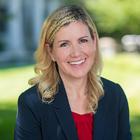
Sarah Irvine Belson Professor BSE | General Academics & Research

Antonio Ellis Associate Professor BSE | Online Partner Programs (OLP)
FAQs
What are graduates from the MAT Special Education programs doing now?
Many graduates work in various settings related to special education including public schools, private schools, independent schools, clinics, treatment centers, government, and research institutions. Graduates also go on to doctoral programs and leadership positions in government, education, and organizational settings. Read about our alumni:
- Ruby Marsh, BA/MAT ’26
- Abbey Phelan, MAT ’26
- Olivia L. Henry, MAT ’24
Can I continue to work full-time while completing the program?
Full-time work may be accommodated depending on the circumstances of the student. All MAT: SELD courses are offered from 5:30–8:00 p.m. or 7:30–9:20 p.m. ET.
When does my teaching placement start?
Students who require student teaching credits complete a year-long placement at a partner school site. Students completing the program in one year typically start their student teaching placement during their first semester.
Can you work while completing your student teaching placement?
During the year that your student teaching placement occurs, you attend classes from 7:45 a.m. to 12:30 p.m. Students may work part-time in the afternoon between student teaching placement and class.
(September–June academic year of placement)
Do I have to take the Praxis CORE to be admitted?
Praxis CORE (or equivalencies) is not required for admission.
While we strongly recommend completion by the end of the first semester, all admitted students must take Praxis CORE (or equivalencies) by graduation. The DC teacher licensing agency sets passing scores as: Reading 156, Writing 162, and Math 150. To submit Praxis, use school code 5007 (no department code). Praxis scores can take up to six weeks to arrive after the test date. See the Educator Testing Flyer or visit the OSSE website for additional test types.
What are graduates' Praxis pass rates?
Our Master of Arts in Teaching Special Education graduates have earned a 93% rate of passing Praxis over the past 2 decades.
Still have questions?
Send us an email or call 202-885-3731.
Still deciding?
Join us for a virtual information session and hear directly from program faculty and admissions staff about how our degrees are creating transformative education leaders throughout the country. Our webinars dive deep into the curriculum, course load, and expected outcomes of our various online programs and give you a chance to ask any questions you might have.
Admissions
Explore admissions requirements and apply to an American University Baker School of Education program.
Tuition & Financial Aid
Learn about tuition costs, financial aid, and scholarships you may be eligible to receive as you pursue your educational and career goals.
Student Experience
Discover how our innovative technology, thoughtfully designed curricula, and meaningful partnerships will prepare you to be the transformative educator you aspire to be.