Contact Us
10 Interesting Classes at American University
American University offers hundreds of innovative, engaging classes each semester that cover various disciplines and topics from sports economics to social justice and urban sustainability—fusing real-world issues with practical experiences. Here’s a sample of ten interesting courses you can take here at AU.
AU in the Classroom
Professor Matt Winkler, with the Kogod School of Business, stewards a new course designed to help students better understand the forces shaping the the FIFA World Cup 2026. Throughout the 2026 spring semester, students met with prominent diplomats and soccer officials, including Jason Levien, owner of D.C. United, during a special field trip to Audi Field.
Crash Course: FIFA World Cup 2026
This 1.5–three-credit class is for anyone interested in soccer who wants to dig into this 48-country event taking over the country—and world—in June and July. In MGMT-485/685: FIFA World Cup 2026, Diplomacy, and the Evolution of Soccer in the United States, students will gain a deeper understanding of how mega sporting events shape national identity and international engagement through case studies, guest speakers, and interactive discussions. Students will leave the class knowing why soccer is called the “global game,” and learn from a killer lineup of guest speakers: Alex Spoko, director of government relations and public engagement for FIFA World Cup 2026; Henry Bushnell, senior writer for US Soccer at The Athletic; and Dan Mickelson, chief of sports diplomacy at the US State Department.
The Economics of Baseball
There’s more than one way to play ball. A new class in the College of Arts and Sciences is stepping up to the plate, using baseball to bring economic theory to life. Economics PhD candidate Luke Fiore developed The Economics of Baseball, a fun, one-credit, five-week course that turns America’s favorite pastime into real-world lessons in economic power, labor battles, superstar pay, and the high-stakes system behind the sport—all while giving students an opportunity to think like economists.
Anatomy of the Fantastic
This course, HIST-341: Anatomy of the Fantastic, explores the human invention, evolution, and engagement of fantastic realms throughout recorded history. If you're interested in topics like ancient magic books, supernatural creatures, and storytelling traditions of inexplicable phenomena, this one is for you. Students trace the evolution of these themes and more across time and space, tracking their influences on the rise of twentieth-century fantasy literature before embarking on a close analysis of the narrative and mathematical mechanics of modern fantasy world simulations such as war games, role-playing fantasy simulations, and role-playing gamebooks. Students also learn how to produce their own short but replicable simulations of fantastic, invented worlds.
Washington, DC Architecture
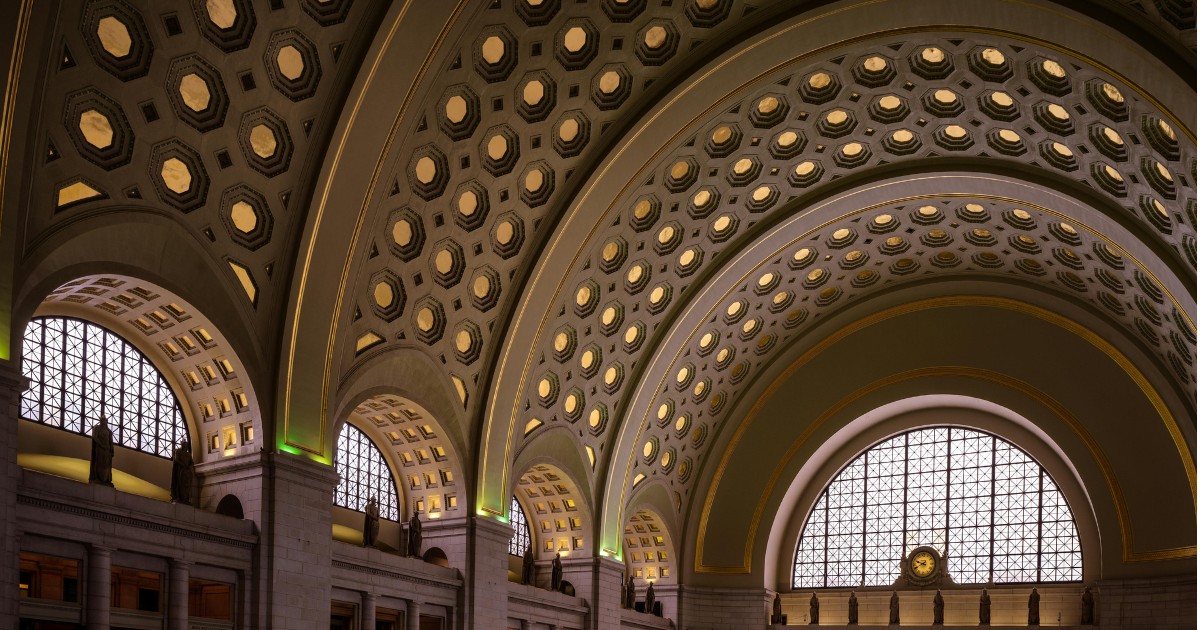
Whether American University is your first introduction to our nation’s capital, or you’re already familiar with the District, Washington, DC, is rich in architectural treasures, some of which revive historical styles and some of which show daring innovation. The ARTH-216: Washington, DC Architecture course analyzes the city’s buildings within a broad context of Western architectural history. Class lectures and discussions track the history of architecture, from classicism to postmodernism, while on-site visits provide unique opportunities to view buildings up close, analyze their design and construction, and experience how well they function.
Crash Course: Assisting America’s Returning Citizens
Built around experiential learning, this one-credit class in the School of Public Affairs is for any student compelled to support those reentering society after prison. In Changemakers: Assisting America’s Returning Citizens (SPA 075/375), students leave the class knowing how they can make a tangible difference in people’s lives.
With about two million people incarcerated in the United States, students spend the semester in groups implementing programs that support those returning home. In fall 2025, students collected books for DC Books to Prisons as well as clothing and hygiene products for nonprofit organizations. Additionally, students worked with programs like the Free Minds Book Club & Writing Workshop and the California Ride Home Program.
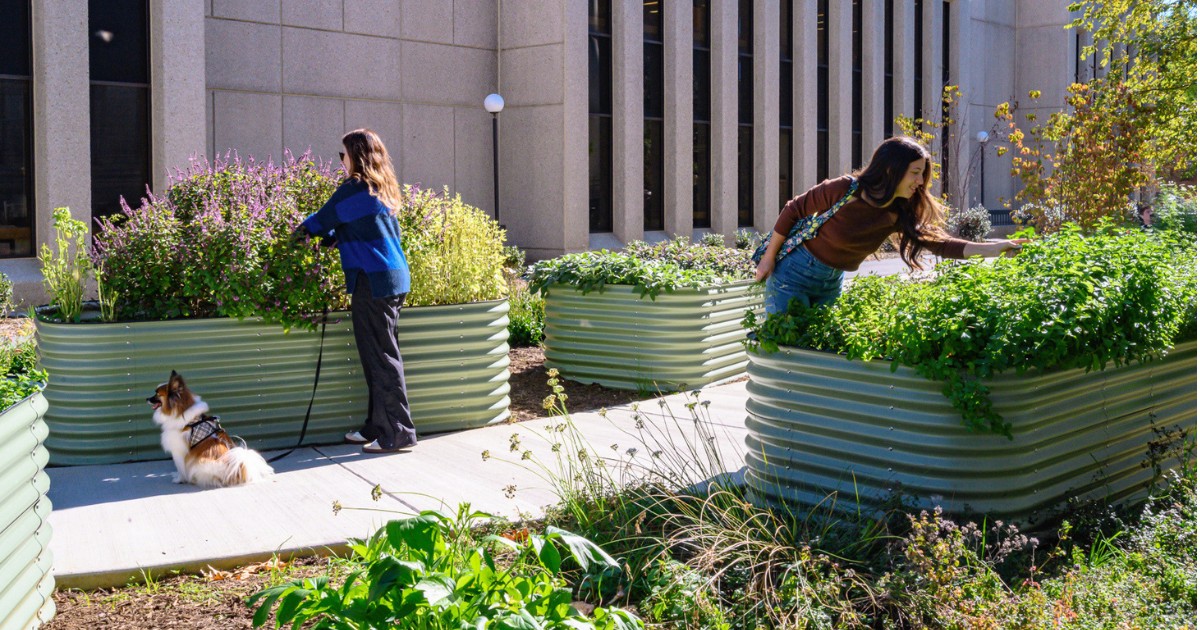
Urban Gardening
If you have a green thumb or want to nurture one—even in the middle of a city—this ENVS-175: Urban Gardening course is a great starting point. Students develop basic gardening knowledge for selecting, planting, and caring for edible and medicinal plants, emphasizing growing food in an urban environment. The course covers growing methods and harvesting skills in addition to preservation and cooking. Students even gain hands-on experience in the AU Community Garden. Coursework includes concepts surrounding gardening, including food security, agriculture, foraging, and community resilience.
Introduction to Performing Arts and Social Action: Performing the Revolution
Learn all about the possibilities of arts advocacy and activism in this PERF-316: Introduction to Performing Arts and Social Action course, which combines applied and studio work, lecture, and community engagement. Students collaborate with local, national, and international artists to learn to craft work in service of social justice. They engage music, theater, and visual arts by visiting galleries, attending live performances, and hosting various artists who create work in the Washington metropolitan area and beyond that wrestle with difficult and significant issues in various cultures.
Entrepreneurship Practicum with AI Infusion: Creating and Launching Ventures
Whether solo or on a team, this MGMT-483: Entrepreneurship Practicum course in the Kogod School of Business helps students from any major turn their ideas into a real venture. Students explore industries about which they are passionate, uncover unique opportunities, and use real-world business tools to validate ideas, test marketing campaigns, and forecast finances. Participants gain hands-on experience in business incorporation, intellectual property (IP) protection, fundraising, and investor-level pitching while connecting with entrepreneurs and investors through valuable networking opportunities. With artificial intelligence (AI) infused throughout the course, students explore how emerging technologies can give their venture idea a competitive edge.
Schools and Society
EDU-205: Schools and Society covers a multidimensional view of schools, teachers, and students. This social and intellectual foundation course in the Baker School of Education serves as a basis for studying contemporary education and the issues of racism, sexism, finance, governance, innovations, and the social context of American education. The course includes lectures, discussion groups, cooperative learning, Internet activities, and independent projects.

Grassroots Digital Advocacy
The COMM-551: Grassroots Digital Advocacy course in the School of Communication examines how advocacy campaigns use digital technologies to activate and mobilize people to promote social and political change. Students explore the intersection of technology with a variety of advocacy organizations such as multi-issue and single-issue national and international non-profits, NGOs, political parties and candidates, and citizen-driven grassroots campaigns. Using national and international case studies and examples, students critically examine and assess technological and strategic innovations in grassroots advocacy and the changing social, media, and political landscapes. Students gain a deep understanding of the forces at play in this field and learn how to apply this knowledge to real-life scenarios.
Curriculum That Prepares You for a Meaningful Life and Career
At American University, you'll develop essential life and career skills in small classes led by expert faculty. Our community of students and faculty work together to think critically, engage globally, and make a meaningful impact.
If you’re a currently enrolled student at AU, you can register for these classes and find more information through the Office of the Registrar.