
American University Student Evan Kinnevan’s Quest to Save the Chesapeake’s Ospreys
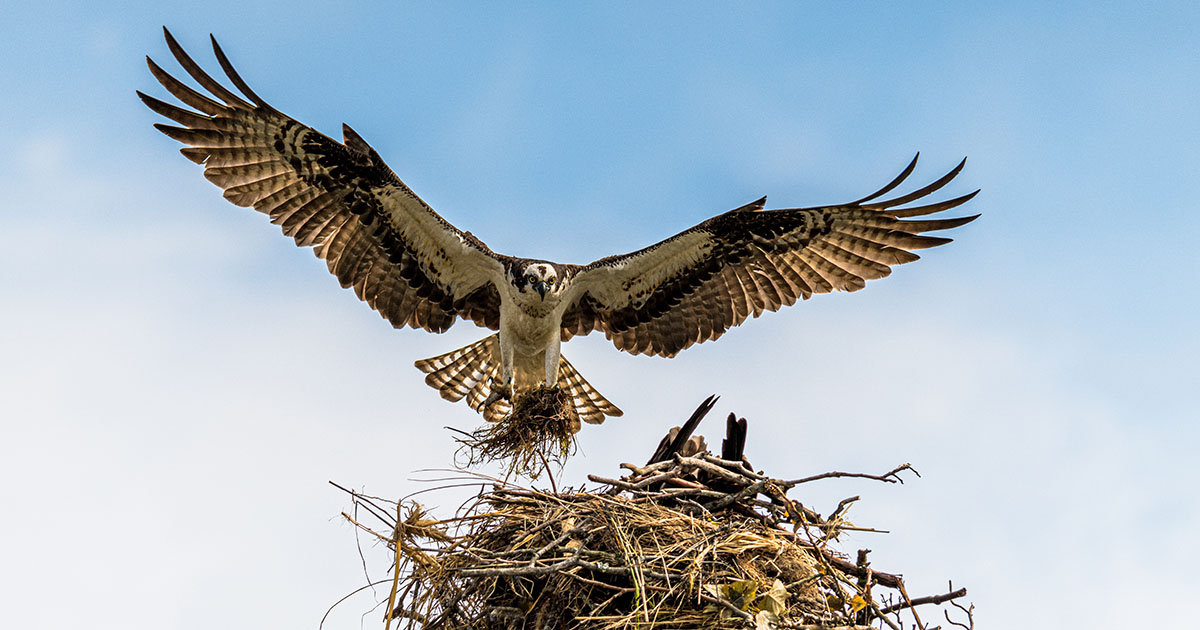
The Chesapeake Bay's ospreys are in trouble, and American University PhD student Evan Kinnevan is on a mission to understand why.
The Bay is home to the world's largest breeding population of ospreys. Each spring, around 20,000 of these iconic birds return from South America to build nests and raise their chicks. But over the past decade, fewer and fewer chicks have survived. A recent Center for Conservation Biology study found that 2026 was the worst year for osprey reproduction ever recorded in the lower Chesapeake. Eighty-one percent of nests failed to fledge a single chick, and the birds produced an average of just 0.25 chicks per nest.
In other words, it took four nests to yield one baby bird––far below the number needed to sustain their population.
To find out why, Kinnevan (Biomedical and Environmental Health Sciences) spent the summer crisscrossing the Bay by boat, searching for clues to the crisis. He found nests where newly hatched chicks had starved to death and others where parents had abandoned their young.
"I saw instances of these tiny little fluff balls, unfortunately dead in the nest because they starved," he says.
For Kinnevan, the crisis became personal. “It’s hard to be a scientist and not be an advocate at the same time because of what I've seen on the ground,” he says.
Counting Chick by Chick
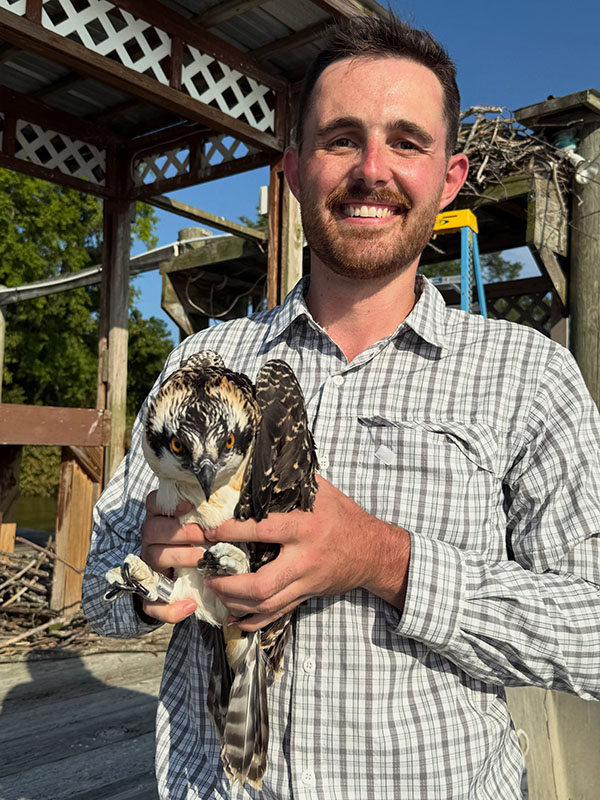
Last spring, Kinnevan joined researchers from William & Mary's Center for Conservation Biology, the Maryland-National Capital Park and Planning Commission, and the Virginia Osprey Foundation to monitor osprey nests in the lower Chesapeake. They approached each nest by boat and raised a long pole fitted with a mirror, allowing them to count the eggs and chicks inside.
“We go up to a nest with our pole, peek over the side, and call out something like, ‘One chick, two eggs,’” he says.
Mindful to not disturb the birds, the team made sure each nest check took no more than 10 seconds. The parent ospreys circled nearby and returned to the nests as soon as the researchers left. The team repeated the checks every two weeks during breeding season, spending six to eight hours on the water tracking trends: when osprey lay eggs, when the eggs hatch, how many babies survive, and how long they survive.
Kinnevan also collected osprey droppings from nests and is using them to identify the species of fish the birds have eaten through DNA analysis. He conducts his research in AU's Koch Marine Lab, led by Environmental Science Professor Chelsea Koch, and is collaborating with US Geological Survey fish biologists to refine his methods. He hopes to find out exactly what the ospreys are eating and how their diets differ across the Bay. Understanding this could be a first step toward finding ways to protect the birds, critical work that reflects AU's commitment to research that tackles pressing problems and makes a difference in the world beyond campus.
The Menhaden Question
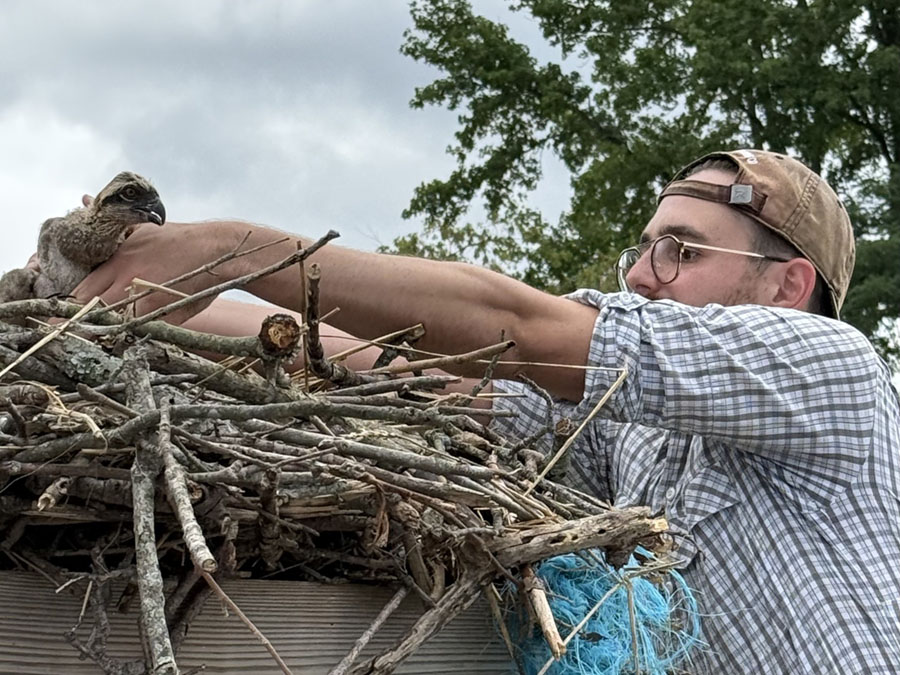 Evan Kinnevan placing a juvenile osprey back into the nest after routine ID banding and health checks.
While the nest surveys showed how many osprey chicks were dying, they didn’t reveal why.
One possible explanation is a shortage of menhaden. It’s a small native fish, too oily and bony for most people to eat. But it is filled with fats and nutrients that make it a critical part of the Chesapeake food web, and it provides the energy that osprey chicks need to thrive.
“When baby osprey eat menhaden, they pack on the pounds really well,” Kinnevan says. “They get that baby fat, which helps them grow.”
Scientists have documented a sharp decline in the number of menhaden brought to monitored osprey nests in the lower Chesapeake, raising concerns that the birds can no longer find enough of one of their most important food sources.
One possible factor is commercial “reduction” fishing. Tens of thousands of menhaden travel together in schools, which look like big dark shadows in the water. Spotter planes can see the schools from the air and point boats toward them. The boats surround the fish with enormous nets called “purse seines,” which close at the bottom like a drawstring purse, trapping the fish. They are ultimately processed––or reduced––into fish oil and meal for products such as pet food and fish-oil supplements.
Whether commercial fishing is contributing to the ospreys' decline remains a matter of debate and an area of active research. In November, the Atlantic States Marine Fisheries Commission voted to reduce the Chesapeake Bay's industrial menhaden catch limit by about 27 percent for 2027 and 34 percent for 2028. Conservation groups had pushed for a 50 percent cut.
More Than Birds
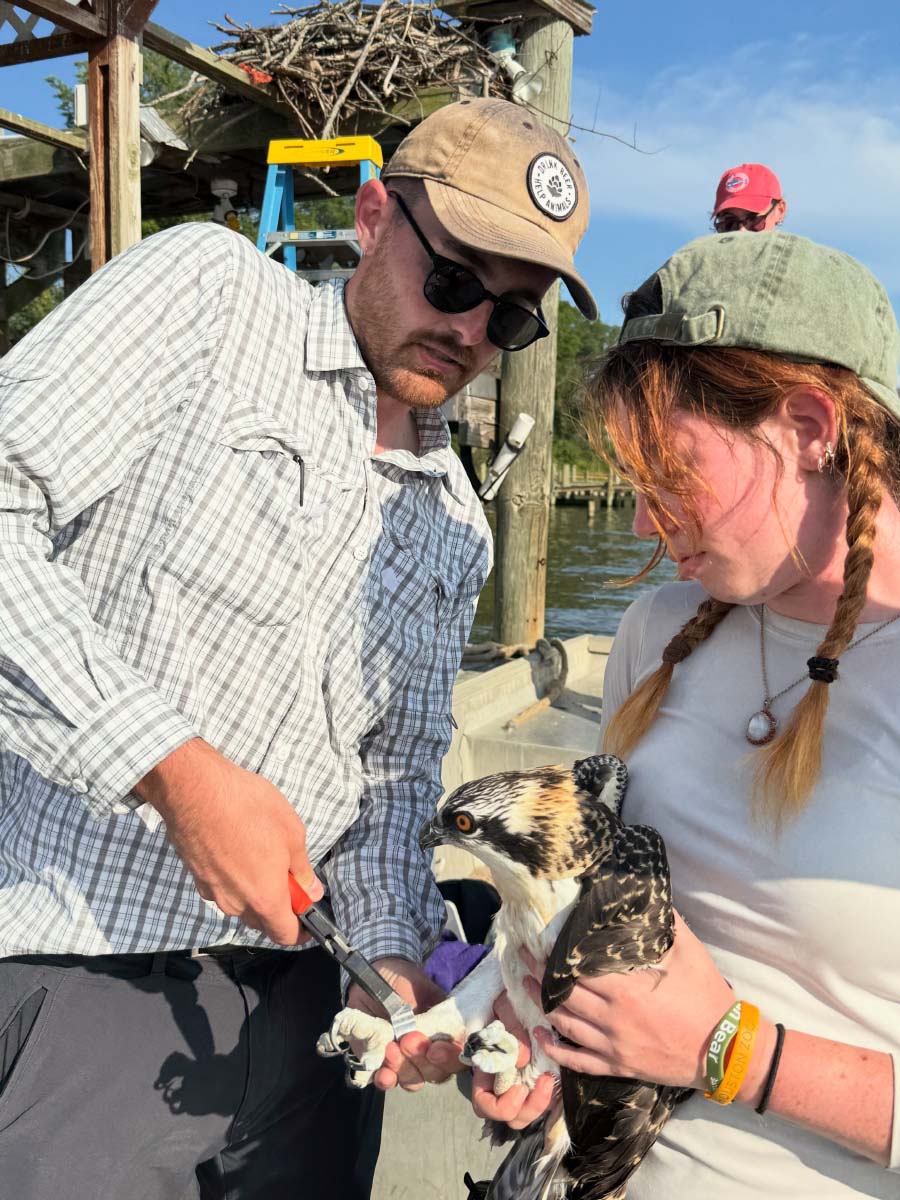
Along the Chesapeake, ospreys are an important part of the community. Residents build nesting platforms for them, celebrate their return each spring with festivals, and watch them raise their young. Residents were the first to notice that fewer chicks were surviving—and to alert scientists.
For Kinnevan, the disappearing chicks may be a sign of a much larger problem. “Ospreys are a sentinel species,” he says. “When they struggle, it can be a warning that something is wrong with the broader Chesapeake Bay ecosystem.”
Kinnevan has three years left in his PhD to build on what he learned during his first summer on the Bay. He plans to expand his sampling to more locations, refine his DNA analysis and bring the techniques to AU, and continue raising awareness about the birds' decline.
There are still more questions than answers about why the chicks are dying. Kinnevan hopes his research will help change that—and give scientists a clearer picture of what it will take to protect them.
“Unfortunately, I only see the ongoing crisis with osprey getting worse,” he says. “I hope my research will contribute to policy changes that reverse the declines osprey are already experiencing and promote the conservation of everything living in the Chesapeake Bay.”