
Preserving the Public Service Pipeline, One Conversation at a Time
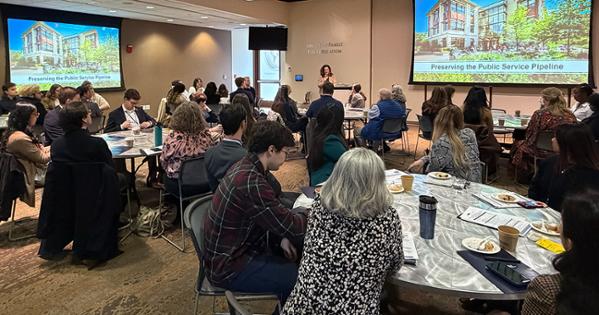
The question was simple: in a time of profound disruption for public service, how do we come together as a community to support each other and continue moving forward?
On a Saturday morning in February, American University’s School of International Service (SIS) offered an answer.
“Preserving the Public Service Pipeline: A Symposium for the Aspirational and the Experienced” brought together roughly 45 students and recent alumni—many who were anxious for what a future career in public service might look like—and just over 40 former federal workers with decades of experience who had recently found themselves without the very jobs they spent their lives building.
But this event did not appear out of thin air. The idea was first sparked at a fall meeting of the SIS Catalyst for Expanding the Field of International Affairs. Now in its third year, this breakfast series is built on the core belief that SIS faculty and staff leaders, current students, and external partners working together can bring more voices and broader perspectives into the international affairs field than any group could achieve alone. This year’s theme, “Resilience and Responsibility: Collaborating to Find Pathways Forward,” turned out to be less of a theme and more of a call to action for attendees.
Building Beyond the Breakfast Table
It started with an easy observation.
Kelly Adams-Smith, an adjunct professor in the Department of Foreign Policy and Global Security at SIS, noticed similar conversations happening on two sides of the table. The former federal workers she knew were feeling unmoored—not just without a job but disconnected from a community and the sense of purpose that had long defined them. Meanwhile in her teaching, she also saw how hungry students were for the opportunity to talk with professionals that had grounded and practical insights into the careers they aspired to have.
“Couldn’t we bring these two groups together?” Adams-Smith asked at the September Catalyst meeting.
It was an idea that would create the type of community that SIS continually seeks to provide, and the people in the room that day were uniquely equipped to make it happen. From there, the idea took flight. Adams-Smith was essential in helping to bring the event into fruition. She personally reached out and brought in more than 25 former federal workers, drawing upon her network to assemble a distinctive group whose experience spanned agencies, sectors, and decades of public service work.
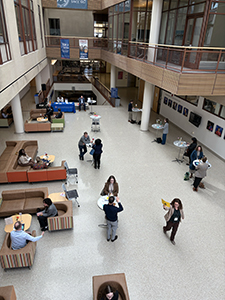 As the event came together, deliberate choices were made about the type of space they wanted to create. Nametags had names, but no titles. A space stocked with snacks and coffee encouraged people to informally connect between sessions. Participants also found a “Community Circles” board where they could sign up to join an ongoing smaller group organized around a particular career aspiration, location, or life circumstance. Speed mentoring conversations—noted as a highlight on both sides—were framed as unstructured and real conversations rather than pitches.
Another popular session was “Thinking Outside the Box: Parallel Pathways that Need Your Skills,” which featured Ryan Gliha, a former State Department employee who has built a LinkedIn movement called “Hire a Diplomat.” In the session, he encouraged others to think broadly about the skills and expertise they have that could be applied in other roles and contexts. Meanwhile, the “Career Pivots in Practice” session featured two standout SIS alums whose paths took them from USAID to one owning her own career and life coaching practice and the other to local government. While both have since moved on to new and impactful chapters, their throughline can be traced in a way that feels simultaneously specific and universal by taking their well-earned experience and finding a new place to use it.
Preserving the Pipeline
After the event, attendees were asked to share a few words or phrases that captured how they felt after leaving.
Inspired. Proud. Joyful. Empowered. Rejuvenated. Seen.
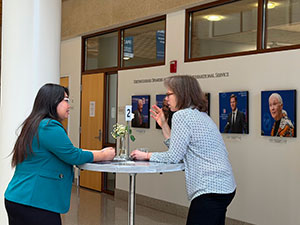 For the students and recent alumni, it offered perspective and possibility at a time when things may seem bleak. For former federal workers, the day offered something harder to define: a sense of belonging again and doing work that matters.
“In a time of extreme disruption and uncertainty about the future of public service, this session was much needed,” one attendee wrote. “I urge you to make it a regular event.”
The ability to institutionalize a response to changing conditions reflects something that SIS has always understood and strived to do. The challenges within the field of international affairs may change, but they won’t disappear. Conversations must continue to be kept alive and turned into action.
The pipeline to public service cannot preserve itself. But it can be preserved through the dedication of a few willing to go out and do better for the world, one idea at a time. The SIS community stands always ready to answer that call.