
What to Know About the Ebola Outbreak
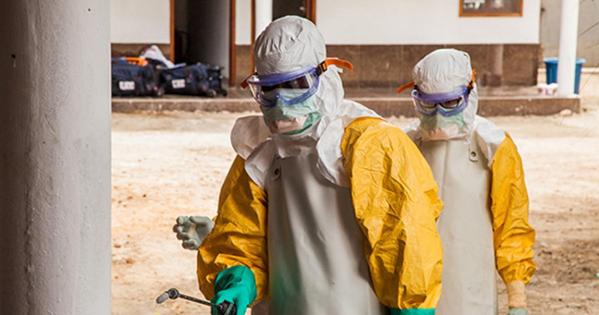
On May 17, 2026, the World Health Organization (WHO) declared the Ebola outbreak in the Democratic Republic of the Congo (DRC) a Public Health Emergency of International Concern, citing rising case counts, cross-border spread, and significant uncertainty over the true scale of the epidemic. The outbreak is caused by the rare Bundibugyo strain of the virus, for which there is currently no approved vaccine or specific treatment.
To better understand what this outbreak reveals about both the virus and the state of global health response networks, we spoke to School of International Service professor and Chair of the Department of Environment, Development & Health Lauren Carruth, a medical anthropologist with research focused on emerging zoonotic diseases.
- The Bundibugyo strain is relatively rare as this is only the second time it’s caused an outbreak in the DRC. What should people know about it, and why did it take weeks to identify this strain?
- There are several different strains of the Ebola virus; most are the Zaire strain. Unfortunately, the effective vaccines and treatments that have been developed and used to control outbreaks of Ebola in the last several years were developed specifically for the Zaire strain. The Bundibugyo virus is a much rarer Ebola virus, but it isn’t a new strain; it was first identified in 2007. While there are no approved vaccines, there are some being developed, but it will take months for them to be tested for efficacy and safety in clinical trials.
- In previous Bundibugyo outbreaks, the virus had a fatality rate between 25 and 50 percent. Treatment for Bundibugyo is limited to intensive supportive care and helping people manage their symptoms, including most importantly rehydration, electrolyte balancing, oxygen and blood stabilization, alleviating pain and fever, and treating any other infections such as malaria.
- One of the most challenging features of the current Bundibugyo outbreak is how long it took for this to be recognized as Ebola and as a result, how potentially widespread it already is. Bundibugyo had been spreading for weeks undetected, probably since around April 20, mainly because sick individuals only reported nonspecific symptoms—symptoms that could have been malaria, typhoid, or other common diseases. It wasn’t clearly Ebola. Diagnostic tests and rapid screening tools were not available in this area and were only designed to detect the Zaire strain of Ebola.
- Without local ways to test for different strains of Ebola, biological samples had to be taken to the national laboratory hours away in Kinshasa—a laboratory that has faced recent funding and staffing shortfalls. Consequently, the outbreak was not confirmed as the Bundibugyo strain of Ebola until May 15, nearly a month after the first suspected death and a confirmed diagnosis. In the meantime, the virus spread to hundreds of people in a wide geographic area.
- Ebola is a zoonotic disease, meaning it can be transmitted between humans and other animals. How does the initial crossover happen, and what are the conditions—environmental, structural, or social—that make it more likely to spread?
- Ebola virus strains are common in certain species of fruit bats in this part of Africa; the virus can circulate within bat populations asymptomatically and without killing them, so it is impossible to fully eradicate. These bats are likely what is called the primary “reservoir” of this and other Ebola viruses, and bats are also the most likely source of “spillover” (or transmission) to humans. After an initial spillover event to humans, Ebola viruses can then spread from person to person. Scientists don’t fully understand when and under what conditions spillover happens. There are many possibilities: bats might drop partially eaten fruit that is then eaten by other mammals. Then people who incidentally come into contact with bats or other infected mammals through hunting, handling, or butchering them are at heightened risk of exposure.
- A few structural and environmental conditions make spillover more likely. First, the current epicenter of the Bundibugyo outbreak is in Mongbwalu, a gold-mining and labor migration hub in Ituri Province of the DRC. Epidemiologists from the WHO believe most early cases originated there then spread to other health zones as patients sought medical care and traveled. Mining operations in this part of the world bring large numbers of people into environments along the edge of forests populated by wildlife species that might cause spillover events. Second, previous outbreaks of Ebola have been linked to forest loss and forest fragmentation. Deforestation affects bats and other wildlife; it may change the natural circulation of viruses, and it may increase the likelihood that mammals, including humans, come into contact with infected animals.
- As in other Ebola outbreaks, health workers are at great risk. The first suspected case (or the “index” case) was a nurse from the DRC. Unfortunately, because her illness was not recognized as Ebola, her funeral proceeded as usual, including ceremonies that involved loved ones touching her body. Ebola viruses are highly concentrated in the bodies of the recently deceased (and the very ill), so funeral practices involving physical contact have been an important driver of community transmission. Beyond funerals, gaps in local health systems have also likely played a huge role in this outbreak. For weeks, health workers in this area have been unknowingly treating Ebola patients wearing only gloves and surgical masks rather than full protective equipment, leaving them dangerously exposed.
- What are the challenges to the DRC and its neighboring countries in addressing and containing this outbreak?
- Conflict and population mobility are the two greatest challenges for the DRC and its neighbors. Armed conflict and internal displacement in Ituri Province have intensified since last year. According to the UN, over 100,000 people have been newly displaced in the last few months. Multiple armed groups operate throughout the province, restricting access to response teams and clinical facilities, at times targeting healthcare facilities for attack, and driving the population mobility that helps the virus travel. Additionally, Bundibugyo has now spread beyond the more remote Ituri Province. Infections have been confirmed in the cities of Goma (with a total population of over a million, on the border with Rwanda), Bunia (about 800,000 people), and Kampala, Uganda (population 1.9 million). This is an area of high population mobility: the region hosts numerous labor migrants, refugees, and internally displaced persons. This makes contact tracing, provision of healthcare, and diagnostic testing even more difficult.
- The US has withdrawn from the WHO, the U.S. Agency for International Development’s (USAID) DRC mission has been shuttered, and the U.S. Centers for Disease Control and Prevention (CDC) has faced significant staffing and funding cuts. What does the global health response look like right now, and does it have the capacity to handle an outbreak like this?
- While officials from the WHO have downplayed the role of cuts to international organizations in hampering the response, local reports argue that the absence of USAID and U.S. funding has been highly consequential. According to this and other media reports, American officials did not learn of the confirmed outbreak until nine days after the WHO did, and almost a month after the first person died. The delay was compounded by samples being transported to the Kinshasa lab at the wrong temperature—a logistics task previously managed by USAID. USAID previously provided health worker training, contact tracing, testing, safe burial resources, and assistance with supply chains. In a recent New York Times article, Dr. Salim Abdool Karim from the Africa CDC asked, “Who else can bring 20 trucks in a matter of three days, have drivers, have fuel?”
- After the 2014–2015 Ebola outbreak in West Africa, the U.S. government made large investments in its outbreak response capacity for Ebola in particular. However, in the last 15 months, the U.S. CDC has lost around 700 staff and contractors, including the head of the Division of High-Consequence Pathogens, which covers Ebola. CDC offices in DRC and Uganda have also lost numerous staff and funding. Loss of research funding at the National Institutes of Health and in laboratories and centers around the world compounds these reductions in staffing and expertise.
- Looking beyond the immediate emergency: what can medical anthropology tell us about outbreaks like this that traditional medicine or science might not pick up on?
- First, medical anthropologists would look critically at the narrow ways this outbreak is portrayed in the media and by policymakers and politicians. There is more than just a virus, an affected or at-risk population, and a response to control the virus. That framing treats politics, society, and people’s lived experiences as only backdrops. Instead, anthropological research demonstrates that outcomes and factors such as who gets sick, when, to what extent, and how interventions like vaccination and containment unfold are fundamentally shaped by history, political-economic systems, and structural inequalities. For example, as in previous Ebola outbreaks, health workers, caregivers, labor migrants—and women in these roles, in particular—are at heightened risk of infection and death. This points to entrenched and known patterns of structural vulnerability, not just a virus out of control.
- Several articles in the media about Bundibugyo point to traditional funeral practices as driving this outbreak. Medical anthropology offers important correctives to this narrative. As Sharon Abramowitz and other anthropologists demonstrated in the 2014–2015 Ebola outbreak, funeral practices are not simply the result of ignorance or superstition but are deeply meaningful acts of social obligation, grief, and spiritual protection. To not touch the body of a deceased loved one, in many communities, represents a profound moral failure and not a rational or public health choice. This kind of insight, rather than blaming people’s “unsafe” behaviors, is key to advocating for necessary changes to ceremonies like funeral rites. Effective interventions in past Ebola outbreaks have entailed scientists and health workers working alongside community leaders and religious authorities to develop modified burial practices that preserve the social, emotional, and spiritual significance of the ritual while reducing transmission risk.
- Medical anthropology emphasizes the importance of trust in effective healthcare delivery and health policy. Ituri Province and areas throughout eastern DRC have experienced decades of exploitative resource extraction such as gold mining—including by the very same international organizations and governments that intervene during emergencies but then depart as soon as the global threat of outbreaks has been contained. People remember past exploitation and past abandonments. During the 2018–2020 Ebola outbreak in North Kivu and Ituri, for example, anthropologists documented cases where community members attacked response teams and burned treatment centers—not because they didn't believe Ebola was a serious threat, but because they distrusted interventions by unfamiliar global institutions and Kinshasa-based governmental authorities. An anthropological perspective also helps highlight how the armed groups operating in this part of the DRC are not simply or only obstacles to response. In many communities they are widely trusted, and many people depend on them for security and other services.
- Through the framework of structural violence, medical anthropological perspectives try to connect what might otherwise seem like separate facts: the poverty of Ituri Province, the long history of mineral extraction, violent colonial occupations, the ongoing armed conflict there, the lack of protective equipment and diagnostic laboratories, and the spillover of the virus. These are not coincidental. Mining is part of global supply chains that benefit consumers and companies far from Ituri Province, but this requires exploitative and dangerous working conditions often fulfilled by impoverished migrants. The armed conflicts in DRC are, in part, a fight over those same resources. The health system is impoverished and understaffed in part because of decades of extraction, labor exploitation, and structural adjustment policies designed to curtail public spending. The outbreak, from this perspective, is not an unlucky collision of a virus, a bat, and a nurse, but is instead a predictable result of interrelated political, social, and economic structures.
- Finally, medical anthropologists have provided critical reflections on declarations of a Public Health Emergency of International Concern (PHEIC) itself by organizations like the WHO. The PHEIC framework is designed to mobilize international resources and coordinate response, and in doing so, it has real value. But anthropologists like Vincanne Adams argue that the PHEIC framework, and global health emergency discourse more broadly, tends to frame crises as exceptional, temporary ruptures in an otherwise stable world. This sort of crisis framing can work against long-term investment in health and response systems because it treats outbreaks as discrete events to be managed rather than as symptoms of ongoing conditions. For example, the DRC is experiencing its 17th Ebola outbreak since 1976. So, the interesting question is not why this outbreak is happening—since the conditions that produce it are endemic, persistent, and predictable—but instead, why does the global health system continue to treat each one as a surprise requiring emergency response rather than addressing the underlying conditions that make the DRC a recurring site of outbreaks? The current collapse of U.S. global health infrastructure, including USAID, viewed through this lens, does not appear as an aberration but a reflection of longstanding patterns of under-investment punctuated by crisis-driven attention.
- These kinds of anthropological re-framings have specific policy implications. If outbreaks like this one are structurally produced, then the response cannot be only technical—a new vaccine, more protective equipment, faster diagnostics, and new and better treatments. It also cannot focus only on individuals’ behaviors and choices—to attend a funeral, to touch a body, to hunt and prepare meat. Effective responses have to include lasting and more comprehensive political, economic, and social changes. That is a harder argument to make in the context of an acute crisis, but medical anthropologists would argue it is the only argument that addresses root causes.