
Building the Future of Investigative Journalism at AU
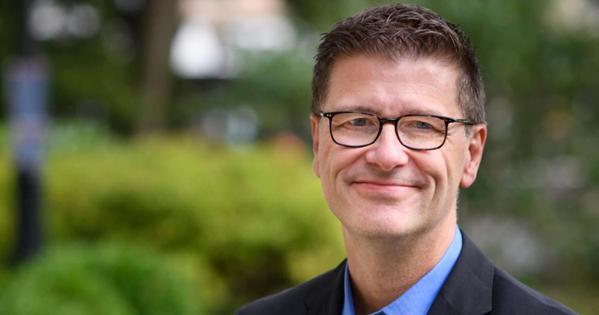
For more than two decades, Joe Stephens has worked at the intersection of investigative journalism and education, reporting on issues ranging from presidential politics to the federal judiciary and the war against terrorism. Now, as assistant professor of Journalism at American University and executive director of the Investigative Reporting Workshop (IRW), Stephens is bringing that experience to our students.
Q: You’ve had a long career in investigative journalism, including more than 16 years at The Washington Post and 12 years at Princeton. What brought you to American University and IRW?
Joe Stephens: AU and IRW bring together two strands that have defined my career: producing ambitious accountability journalism and helping early-career reporters learn their craft by doing work that matters. I spent years in the trenches of investigative reporting at The Post, where -- if you did things just right -- your reporting could have a huge impact. Then I had the rare opportunity to find and lead the journalism program at Princeton, and watch students go off to improve the world through their reporting at major news organizations. So, when the opportunity at IRW arose, it just seemed designed specifically for me, pulling together all my experience and everything I care about most.
Q: What’s distinctive about the chance to lead IRW?
Joe Stephens: It’s the opportunity to nurture major investigations at a workshop that, for 18 years, has set the standard for producing investigative reporting that’s rigorous, ethical, and in the interest of the public. IRW’s a true pioneer of the collaborative, investigative lab model. It provides young journalists the rare chance to produce high-impact work arm-in-arm with veteran journalists.
Q: For someone who may not be familiar with IRW, how do you think it fits into today’s journalism landscape?
Joe Stephens: First, consider that landscape: This is an existential moment for accountability reporting. Verified facts are under attack, and financial pressures have eroded the traditional routes through which I and previous generations of investigative reporters learned their craft. The stakes extend far beyond journalism, because a muscular press corps is essential to transparent and democratic government. Luckily, the Workshop is ready to meet that challenge. IRW is exactly what this moment in history demands.
Q: Why is the Workshop particularly valuable for our students? What experiences do they gain through it that would be difficult to replicate in the classroom?
Joe Stephens: We’re trying to make IRW the single best place in the world to learn how to do investigative reporting. So, in our newsroom, young journalists learn by doing. Just like at a teaching hospital, they gather all that they’ve learned in the classroom and apply those skills to real-world investigations. There’s no better way to learn the craft.
Q: How do you see your work in the classroom connecting with your work in the Workshop?
Joe Stephens: Every bit of it is intertwined, one side reinforcing the other. In my in-depth reporting course, each student will develop an original story idea and a detailed reporting plan. I’ll help them along by drawing on everything I’ve learned over decades in the field — how to identify stories worth pursuing, obtain documents, analyze data, check facts and turn complicated reporting into compelling narratives.
The strongest ideas won’t end when the semester does. We’ll carry them directly into the IRW newsroom, where our early-career journalists will work alongside veterans to turn those plans into multimedia investigations. We’ll co-publish that work with outstanding news organizations, large and small.
Q: What are you hoping to build or expand at the IRW during your time at AU?
Joe Stephens: We are exploring new publishing partners, new media, and new ways of telling stories. At the same time, we want to make IRW an active hub for SOC and the wider AU community. We are planning lunchtime brainstorming sessions in our campus newsroom, and other events designed to bring students, faculty and journalists together. We also are looking into launching collaborations with colleagues at SOC, and with scholars in other schools and other disciplines, so that we can experiment with new forms of storytelling — particularly ways to reach audiences that traditional news outlets and conventional forms of journalism cannot.
Q: If you could give students one lesson from your investigative journalism career, what would it be?
Joe Stephens: Keep an open mind. It’s astounding how often fact checking and deep reporting bring us to a new truth we could hardly have imagined.