

Contact Us
Spring Valley Building , Room 471 on a map
4801 Massachusetts Avenue NW Washington, DC 20016-8030 United StatesFive Years of Reading Partnerships with DC Public Schools
We have worked together with DCPS educators over the past five years to improve teacher and leader knowledge of culturally and lingistically affirming reading instruction to support student reading achievement. We have built sustaining relationships with:
- 27 Elementary school principals
- 3 Instructional superintendents
- 100 ELA and SLA coaches and hundreds of teachers
- 8 Fully funded EdD early literacy intervention leaders and 39 EdD graduates who studied early literacy intervention and special education
About Our Collaborations with Educators
Writing Instruction & Discourse Practices (2024-2025)
As the partnership between the IIE and cluster 5 entered its third year, the partners transitioned to a seminar format for the leadership sessions and elected to focus their attention on writing instruction and discourse practices.  As such, the the sessions aim to provide a systemic view of reading instruction focused on the leadership, curricular, and policy factors that influence reading instructional approaches and assessment.
Throughout the year, instructional leaders engaged in practical application of seminar content to build professional development and coaching approaches. Grounded in evidence-based practices and in alignment with district guidance, the instructional leaders will be even more equipped to support MLLs and students with IEPs in all schools.
The leadership sessions include the following topics:
-
Explicit instruction to support classroom discourse and academic language use for speakers of all languages
-
Systematic approaches to teaching students to use morphemes and new vocabulary words
-
Sentences & Syntax in ELA and SLA
-
Paragraph Writing in ELA and SLA
-
Expository and persuasive essays
-
Writing in the content areas & academic writing across languages
-
Narrative writing, oral storytelling, and public speaking
As part of the seminar structure, instructional leadership teams from each school presented their “coaching-in-progress" to the other schools. These presentations and discussions allowed for a genuine exchange of ideas among leaders and coaches about the messiness of implementing evidence-based practices related to writing instruction and discourse practices.
Language Comprehension (2023-2024)
In 2023-2024, the IIE continued to provide professional learning sessions to instructional leaders at the 15 elementary schools in cluster 5. The focus of the partnership switched from foundational literacy skills to language comprehension. 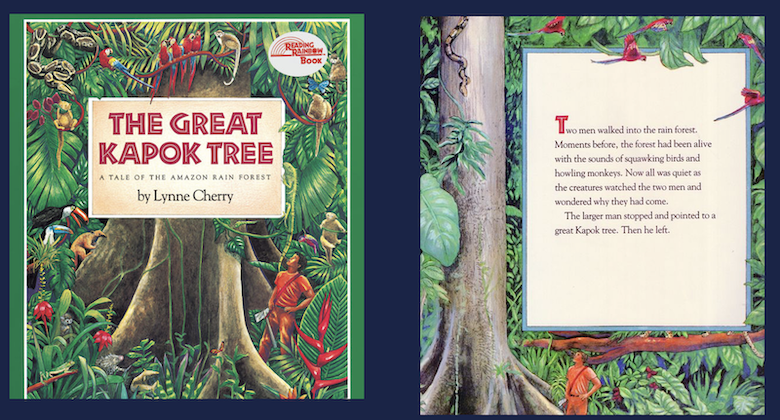
The leadership sessions included the following topics:
-
Introduction to Language Comprehension
-
Vocabulary & Morphology: English, Spanish, and Across Languages
-
Dyslexia
-
Syntax & Language Structures
-
Complex Texts
-
Assessing Comprehension
-
Oral Language
At the four dual-language “focus” schools, coaching cycles continued, and the IIE coaches focused on supporting teachers’ use of evidence-based biliteracy practices in both whole group and small group settings.
Sustaining Evidence-Based Practices & UFLI Foundations Pilot (2023-2024)
In the third year of the partnership, the IIE supported cluster 1 schools by providing four leadership sessions and eight professional development sessions for instructional coaches as well as piloting UFLI Foundations, an explicit, systematic phonics program, in grades K-2 at four schools.
The leadership sessions included the following topics:
- Exploring the Top of the Rope: Developing Language Comprehension
- Instructional Alignment & Equitable Differentiation
- Reading Comprehension: Class-wide Interventions
- Reading Comprehension: Assessment and Intervention
The sessions for instructional coaches included the following topics:
- Introduction to Language Comprehension
- Vocabulary
- Sentences
- Paragraphs
- Fiction
- Nonfiction
- Knowledge-Building Approaches
The UFLI Foundations Pilot
In addition to the leadership sessions for principals and the professional learning sessions for coaches, the IIE team supported the implementation of UFLI Foundations in four elementary schools. The pilot study of UFLI Foundations began with a professional development session prior to the start of school, followed by weekly professional development and coaching for the first two terms of the year. In terms three and four, the IIE coaches faded their support to once every two weeks.
 Throughout the year, the IIE coaches supported the use of UFLI Foundations in general education classrooms, small group and supplemental instruction, and—with adaptations—for specialized instruction. At the end of the pilot year, 100% of educators reported that they would like to continue using UFLI Foundations.
Implementing Scientifically Based Reading Instruction & Schoolwide Systems (2022-2023)
In the second year of the partnership between the IIE and Cluster 1 schools, the focus shifted from the fundamentals of reading acquisition to the implementation of scientifically based reading instruction and schoolwide systems that are culturally and linguistically responsive. Building on the prior year’s work, and in response to the expressed needs of Cluster 1 leaders, the partnership’s components included eight leadership sessions for school leaders and intensive coaching and support at four schools. 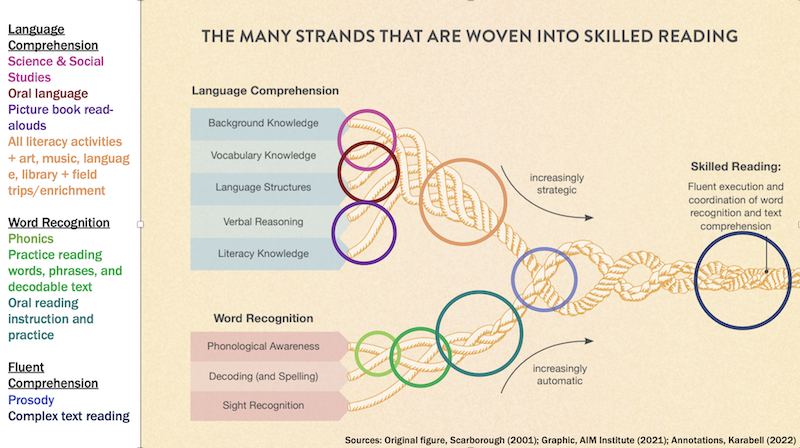
The leadership sessions included the following topics:
- BOY Data Analysis and Planning
- Progress Monitoring and Data-based Decision Making
- Progress Monitoring and Intervention Planning
- Effective Small Group Reading Instruction
- Upper Elementary Reading Instruction and Centers
- Writing Instruction: Composition and Transcription
- Sentence-level Writing and Summer Planning
AU faculty provided intensive ongoing coaching and support to educators at Hendley, Noyes, Patterson, and Turner throughout the school year. This support included direct coaching, participation in planning meetings with instructional leaders, and school-specific professional development. On average, the coaches visited the schools approximately thirty times during the school year to support both leaders and teachers at the schools.
At the annual convention for the International Dyslexia Association, the IIE and two DCPS leaders presented findings from this ongoing collaboration.
Scientifically Based Reading Instruction & Schoolwide Systems with a Specific Focus on Dual Language Schools (2022-2023)
With the continued successes in Cluster 1, DCPS leaders expanded the partnershp to include the 15 elementary schools in cluster 5, which includes the District's eight dual language schools. We partnered with cluster 5 principals and instructional leaders to build knowledge and understanding of strategies related to foundational literacy skills. Each session included opportunities for connection between and among school leaders and coaches, presentation of content and instructional approaches related to each topic, opportunities to practice approaches, and recommended follow-up tasks for leaders to undertake with teachers at their schools.
The leadership sessions were collaboratively planned with DCPS’ Bilingual Program Developer, the Dual Language Program Specialist, the Elementary ELA and Social Studies Content Manager, and the Instructional Superintendent. Each session was connected to evidence-based reading instruction as it relates to dual language education and multilingual learners.
The leadership sessions included the following topics:
- Introduction, Epistemology, Oral Language Introduction
- Oral Language Development and Strategy, Precursor to Literacy Development
- Connecting Oral Language and Phonemic Development, Intro Decoding
- Goal Setting and Phonemic Development (Hear-it: NBSG)
- Data-based decision making and Decoding (Decode it: NBSG)
- Encoding (Spell it: NBSG)
- Fluency (Read it: NBSG)
- Comprehension (Comprehend it: NBSG)
A range of 35 – 50 individuals participated in these sessions, including the fifteen cluster 5 principals, leaders from each school, and the Cluster 5 Instructional Superintendent participated in the leadership sessions. Other members of school leadership teams, DCPS Central Office staff, university researchers, and DCPS consultants joined the sessions as well.
A specific exercise completed in the cluster 5 leadership session, as requested by the IS, was for participants and university partners to co-construct the formal objectives of the partnership. The five goals that define the year’s work included:
- Interpret why and how each of the literacy strands supports skilled reading
- Co-construct and implement professional development designed to enact instructional strategies that support all students' development as skilled readers. This includes developing norms about the assessment of student progress, data-based decision-making, current systems and instructional approaches, increased use of evidence-based practices, observation protocols, and the use of Tiers 2 and 3 interventions.
- Analyze and use student data to support school staff (meaning: teachers and LEAP leaders) in making pedagogical decisions aligned to student progress
- Recognize and promote instruction that fosters students' biliteracy (as relevant)
- Develop goals and implement plans to enact these goals and monitor their progress using DCPS's adopted curricula and assessments
Based on the collaboration in the first year of the partnership, the IIE and DCPS leaders presented at La Cosecha, a Dual Language conference in New Mexico, in November 2023.
At four of the dual-language schools, instructional leaders and teachers worked closely with IIE coaches as they participated in professional development sessions and cycles of coaching. Instructional leadership teams, comprising a principal, assistant principal, special education coordinator, PD leader, coach, DL/ELL coordinator/teacher, or other school-based instructional leader, worked with the IIE coach to strengthen their knowledge of biliteracy, reading development, and evidence-based instructional practices in grades K-5.
In addition, the IIE coach supported general and special education teachers’ biliteracy instruction through several cycles of coaching throughout the year. On average, each coach visited each school 30 times across the academic year. Coaches supported teachers or instructional leaders with the following activities:
- Planning Instruction
- Data Review and Analysis
- Modeling Lessons or NBSG
- Classroom Observations and Debrief
- Vertical Team Meetings
- Full Staff Professional Development
- Curriculum Review
- LEAP Meeting Advising and Facilitating
- Advising During Grade Level Meetings
- Material Development
Professional Learning for School Leaders & Teachers (2021-2022)
District leaders heard about the success of the collaboration between the IIE and Noyes and Langley Elementary Schools and expanded the partnership to include the 11 elementary schools in Cluster 1. The initiative consisted of three components: ten leadership sessions with principals, 16 teacher-facing professinal development (PD) sessions, and intensive coaching for 36 teachers across four schools. 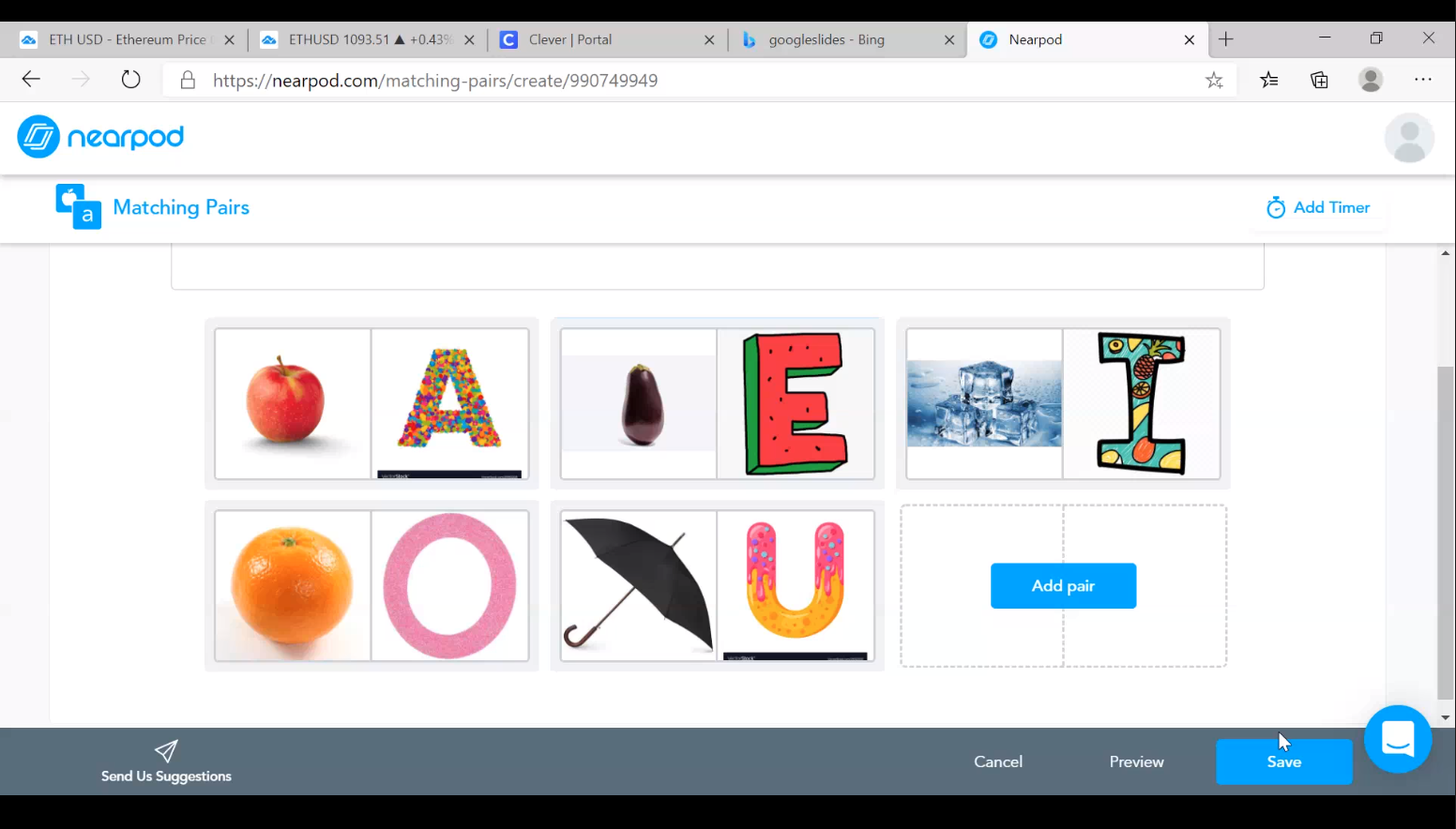
The leadership sessions included the following topics:
- Introduction to the Science of Reading
- The Reading Brain, Phonemic Awareness, and Language Varieties
- Decoding, “Sight” Words, and Assessment Analysis
- Spelling: Scope and Sequence, Instruction, and Assessment
- Reading Disabilities
- Orthographic Mapping and Oral Reading
- Reading Fluency: Accuracy, Automaticity, and Prosody
- Comprehension: Myths, Measurement, and Micro-comprehension
- Syntax and Writing
- Complex and Culturally Relevant Texts
The teacher-facing PD sessions were aligned with the principal session content, and materials were presented in the form of “dilemmas” in which educators were asked to test out different strategies to use to attend to reading instruction approaches.
In addition, American University faculty provided school-based coaching for K-2 teachers at four sites. The AU coach supported the teachers’ initial implementation of the district’s needs-based small group (NGSG) lesson plan. Through planning sessions, modeling, and observation, the coach helped the teachers analyze their student data, form and adjust small groups, select appropriate materials, and differentiate instruction for their students. Participating teachers reported that they were more confident in their abilities to use data to create small groups, monitor progress, and plan lessons targeted to the skills of the students in their small groups.
Overall, the partnership with the 11 elementary schools in Cluster 1 was very successful. A survey measuring knowledge of language and reading was administered to 141 educators in August 2021 and 40 educators in June 2022. Median scores rose from 62% to 75% with a narrower range of scores in the post-assessment. The post-program assessment also included program evaluation items, and participants indicated that they felt more knowledgeable about what literacy strategies to adopt (and which to phase out), that they felt the sessions changed the ways they teach reading, and that they would recommend both the strategies and sessions to other educators.
Collaborative for Reading Science & Inclusive Classrooms (2020-2022)
In early 2020, the IIE partnered with two DC Public Schools, Langley Elementary and Noyes Elementary, to apply for funding from the Special Education Enhancement Fund (SEEF) to improve reading instruction for students with disabilities in these schools.  Through the Collaborative for Reading Science and Inclusive Classrooms, the IIE and the two schools were awarded the grant just before the COVID-19 pandemic forced schools to close; thus, the project collaboration began remotely and continued with an online Summer Institute in 2020 and online professional development and coaching throughout the 2020-2021 school year. School leaders and educators participated in weekly collaborative sessions focused on explicit, systematic phonics instruction and data-based decision making. In June 2021, the IIE hosted a virtual conference to allow educators and leaders at both schools to share effective strategies and accomplishments with fellow educators across the city.
In the 2021-2022 school year, the IIE continued its work with Noyes Elementary thanks to a continuation of the grant from the DC Office of the State Superintendent of Education. The grant funded professional development, coaching, and class sets of books.
Contact Us
If you are interested in partnering with the IIE please reach out to us at [email protected].
What we are learning together!
It's conference season and the IIE will be presenting at the annual American Educational Research Association (AERA) in Denver, CO in April and the annual Society for the Scientific Study of Reading (SSSR) conference in Calgary, Canada in July.
You can also find our most recent publications below:
Anderson, A., Sodani, D.G., Dennis, T., Smith, M., & Irvine Belson, S. (in press). The influence of culturally responsive literacy practices on students' literacy motivation. DOI: 10.1177/21582440251326378
Sodani, D.G. & Irvine Belson, S. (2025). Until every child can read: Spanning boundaries in research–practice partnership focusing on reading and dual language instruction. In D. K. Zenkov, D. Polly & L. Rudder (Eds.) Boundary-Spanning in School-University Partnerships(pp. 47-65). Information Age Publishing Inc.
De León Sautú, N., León, M., D’Alfonso, D., Warren, N., Griffin, J., & Sodani, D. (2024). Teachers learning: understanding continuous professional development in Panama. Professional Development in Education, 51(1), 135–148. https://doi.org/10.1080/19415257.2024.
2431682
Gallery

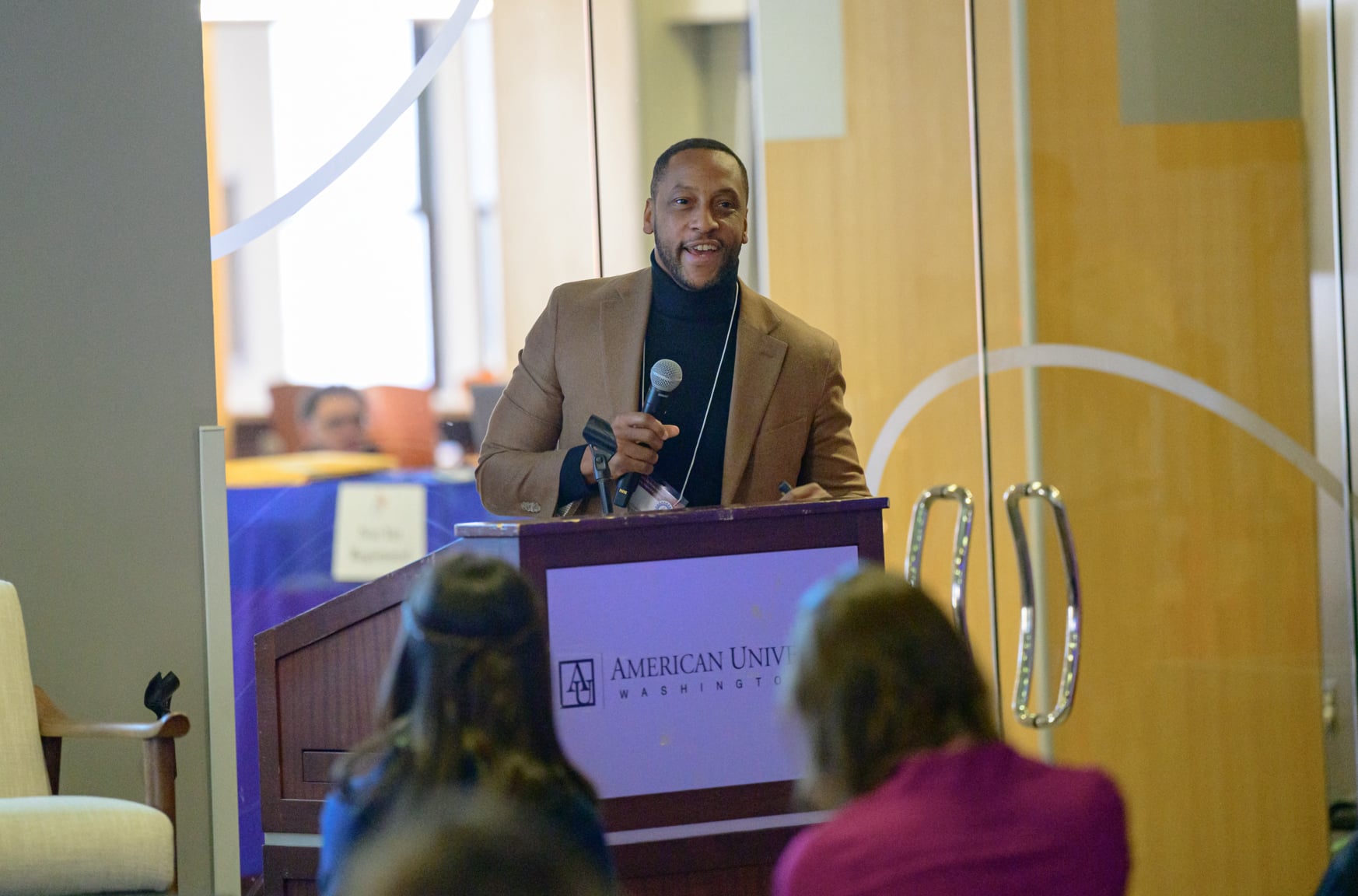
Eric Bethel presenting about DCPS/AU Reading Partnership at the 2025 Ann Ferren Conference.
DC teachers unpacking evidenced-based practices in special education

Graduates in the Early Literacy Intervention Education Doctorate Cohort at 2024 graduation.

Dr. Sarah Irvine Belson giving final 2024 presentation at AU for DCPS Cluster Five Instructional Leaders about evidence-based reading practices with IIE colleagues, Danielle Sodani and Annie Karabell, looking on.
Planting seeds with students at the Joyful Food Market.

Drs. Brandi Smith and Sarah Irvine Belson

Participants at the 2024 Community-Based Heritage Language Schools Conference.