
2026 Cohort Projects and Faculty Mentors Call for Applications Coming in Spring 2026
Please browse or use links below to learn about 2026 projects and their faculty mentors:
- AI & Machine Learning for Breast Cancer Survival/Recurrence Analysis & Prediction
Mohammad Owrang, Computer Science - AI Ethics & Society
Jin Y. Park, Philosophy and Religion - Continual Lifelong Anomaly Detection in High-Stakes Environments
Roberto Corizzo, Computer Science - Detecting Wildfires with AI & Drones
Leah Ding, Computer Science - The Effect of AI on General Chemistry Education: Evaluating Improvement of Student Learning Outcomes
Marjan Alaghmand, Chemistry - Emergent Complexity in Computational & AI Systems
Philip Johnson, Physics - Evaluating Quality & Range of Text-to-Audio Models
Mark Nelson, Computer Science - Finding Weird Galaxies with Machine Learning
Johannes U. Lange, Physics - From Signals to Decisions: Multimodal AI for Financial Market Intelligence
Roberto Corizzo, Computer Science - Leveraging Large Language Models to Combat Hate Speech in Social Media
Nathalie Japkowicz, Computer Science - Spontaneous Emergence of Self-Replicating Programs in Simple Computational Systems
Philip Johnson, Physics - Systematic Prompting of Large Language Models
Michael Robinson, Mathematics & Statistics - Talking across Worlds: Intercultural Communication in Immersive AI Spaces
Krisztina Domjan, Literature
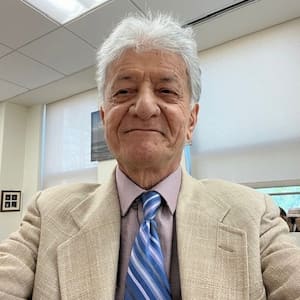
AI & Machine Learning for Breast Cancer Survival/Recurrence Analysis & Prediction Mohammad Owrang, Professor,
Computer Science
Breast cancer is one of the most prevalent and life-threatening malignancies among women worldwide. This study is to use Artificial Intelligence and Machine Learning technique(s) to discover some necessary information and knowledge required by physicians for accurate predictions of Breast Cancer Survival and Recurrence for better decision-making. This study looks at some breast cancer data sets to see who the patients at risk on their survival and/or recurrence of breast cancer.
- Project open to: Sophomores, and juniors during the Fall 2026 semester.
- Required student qualifications: Some knowledge of using computers, programming languages..
- Preferred qualifications: Knowing some computer programming languages.
- About Dr. Owrang

AI Ethics & SocietyJin Y. Park, Professor and Department Chair,
Philosophy and Religion
How should we envision ethics in relation to artificial intelligence? Ethics, as a practical branch of philosophy, is not merely concerned with determining right and wrong; more fundamentally, it asks how we ought to live in ways that contribute to the flourishing of all forms of existence—sentient and insentient, human and nonhuman, organic beings and technological artifacts alike. As artificial intelligence plays an exponentially expanding role in everyday life and contemporary social structures, the question of AI ethics has become an urgent task for engineers, corporations, institutions, and ordinary users alike. This project examines a range of ethical questions raised by AI: Is AI merely a tool, or can it be understood as a form of agency? Who bears responsibility for harm, misinformation, and the reproduction of racism and sexism in algorithmic systems? Should algorithms be entrusted with decisions involving life and death in warfare, or the allocation of care in health and insurance systems? Can AI enrich human life and our relationships with others, and under what conditions? Moving beyond corporate checklists, the project approaches AI ethics as a philosophical inquiry into responsibility, power, and human–machine coexistence./p>
- Project open to: First year students, sophomores, and juniors during the Fall 2026 semester.
- Required student qualifications: A course in ethics or philosophy would be helpful but is not required, provided thatstudents demonstrate a strong interest in the qualities listed in "Preferred Student Qualifications."
- Preferred qualifications: 1. Demonstrated interest in: (1a) AI and society; (1b) Social justice, power, and inequality; (1c) Human–technology relations
2. Willingness to: (2a) Read challenging materials (2b) Engage in critical discussion and reflection (2c) Contribute to collaborative analysis (2d) Explore constructive and positive visions for AI–human collaboration. - About Dr. Park

Continual Lifelong Anomaly Detection in High-Stakes EnvironmentsRoberto Corizzo, Assistant Professor,
Computer Science
Continual Anomaly Detection (CAD) is crucial in dynamic, high-stakes domains, from cybersecurity to healthcare and industrial manufacturing, where identifying critical deviations can save lives and prevent costly failures. In these settings, the definition of “normal” evolves over time as systems and conditions change, reflecting pervasive concept drift. Traditional anomaly detection methods struggle: offline models are trained once and cannot adapt, while online models often overwrite prior knowledge and suffer catastrophic forgetting. CAD offers a path forward by enabling models to adapt continuously while retaining prior knowledge, balancing plasticity and stability. Building on the recently released PyCLAD CAD software library, we will study novel continual anomaly detection approaches across domains such as gravitational waves, medical imaging, industrial defects, and financial data. The project will focus on continual scenarios where models learn to localize anomalies in evolving datasets, maintaining performance on earlier concepts while adapting to new ones.
- Project open to: Sophomores and juniors during the Fall 2026 semester.
- Required student qualifications: Python: Tensorflow/Keras/PyTorch
- Preferred qualifications: CSC-208, CSC-480/680
- About Dr. Corizzo
From Signals to Decisions:
Multimodal AI for Financial Market IntelligenceRoberto Corizzo, Assistant Professor,
Computer Science
This project will tackle multimodal, correlation-aware financial decision support. Building on a deep fusion backbone that combines historical prices, technical indicators, cross-asset interaction graphs, and news-derived sentiment, this project will address temporal modeling with recent models including xLSTM and Mamba to better capture long-range dependencies, regime shifts, and nonstationarity. It will further integrate LLM modules to transform unstructured narratives into structured signals, propose scenario-based stress tests and constraints, and produce human-readable rationales with calibrated uncertainty. Beyond next-day trend prediction, the project will address risk/volatility forecasting, event impact analysis, anomaly detection, and multi-objective portfolio optimization. Evaluation will emphasize walk-forward backtesting, portfolio simulations, and capital preservation in downturns.
- Project open to: Sophomores and juniors during the Fall 2026 semester.
- Required student qualifications: Python: Data manipulation: NumPy/Pandas. Machine Learning: Sklearn. Neural Networks: Tensorflow or PyTorch
- Preferred qualifications: CSC-480/680. Experience in multimodal fusion and continual learning. Prior research drafts or publications.
- About Dr. Corizzo
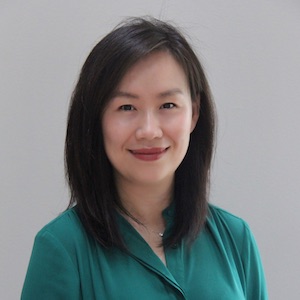
Detecting Wildfires with AI & Drones Leah Ding, Associate Professor,
Computer Science
Wildfires can spread quickly, and it’s hard to know where the biggest danger is just by looking from the ground. In this project, students will join a research team to help build and test an AI-assisted drone system that can detect early wildfire signals. Using aerial images and sensor data collected during drone flights, students will learn how to train artificial intelligence (AI) models to recognize patterns linked to fire risk, such as heat, smoke, or changes in vegetation.
Students will also have the opportunity to join field trips to observe drone flights, see how data is collected in the field, and watch the AI system in action in real outdoor environments. Students will also gain real-world insight into wildfire response by engaging with partners from federal, state, and local agencies (such as NASA centers, the U.S. Forest Service, and the National Park Service) and learning how these teams use AI-powered technology. These interactions will help students understand real operational challenges and guide them in designing AI tools that are practical, useful, and impact-driven.
More about the Detecting Wildfires project.
- Project open to: First year students, sophomores, and juniors during the Fall 2026 semester.
- Required student qualifications: None.
- Preferred qualifications: No prior experience is required, just curiosity and motivation to learn.
- About Dr. Ding

The Effect of AI on General Chemistry Education:
Evaluating Improvement of Student Learning OutcomesMarjan Alaghmand, Senior Professorial Lecturer,
Chemistry
When I teach chemistry courses, I encourage my students to use active learning methods and spend more time on problem solving and reviewing materials as a team. I noticed that learning outcomes are covered more effectively when they employ these methods. To further examine, I asked students to answer their questions, solve more problems, and learn collaboratively. Thus, I develop stimulating learning methods and innovative approaches using Artificial Intelligence (AI), so both learners and faculty members can have a rewarding experience. This has a large impact on leaning general chemistry which is one of the most important and challenging course for both science and non-science students. There are some educators who have successfully used AI, but not a lot of research has been done to create meaningful assessment to measure students’ understanding of chemical concepts. In this research, we gather more data, get more precise results, and make valid conclusions.
- Project open to: First year students, sophomores, and juniors during the Fall 2026 semester.
- Required student qualifications: Students should have taken a chemistry course or chemistry related course (either taking or took a course from college of science before).
- Preferred qualifications: Knowing statistical analysis and Microsoft Office is preferred.
- About Dr. Alaghmand
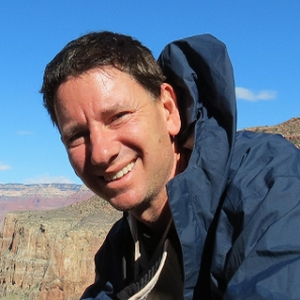
Emergent Complexity in Computational & AI SystemsPhilip Johnson, Associate Professor,
Physics
AI systems like ChatGPT are increasingly integrated into society, yet we lack scientific tools to predict when they will behave in unexpected ways. These emergent behaviors—complex, surprising phenomena arising from simpler components—pose serious challenges for AI safety and reliability. Our interdisciplinary research group, spanning physics, computer science, and mathematics and statistics, builds deliberately simple computational models—such as cellular automata—that exhibit rich emergent complexity. These models can be formally mapped onto the neural network architectures underlying modern AI, meaning insights from simple systems illuminate the behavior of complex ones. Student researchers will code simulations in Python, generate datasets, and apply analysis techniques from dynamical systems theory, information theory, and machine learning to characterize and classify emergent behaviors. Students will develop skills in scientific computing, data analysis, and computational modeling applicable across multiple disciplines.
- Project open to: First-year students, sophomores, and juniors during the Fall 2026 semester.
- Required student qualifications: Curiosity (and potentially some experience) in Large Language Model Technology
- Preferred qualifications: If a sophomore or junior, they should be majoring in physics, computer science, mathematics and statistics, or data science, and have completed at least one year of course in the major. If a high school student applying, would much prefer they have reached at least the level of a first calculus course in high school.
- About Dr. Johnson
Spontaneous Emergence of Self-Replicating Programs in Simple Computational SystemsPhilip Johnson, Associate Professor,
Physics
Start with a soup of random computer programs—no purpose, no design, and let them interact and mutate. What happens? Self-replicating programs spontaneously emerge, spread, compete for resources, and “evolve” into increasingly complex replicators. This remarkable phenomenon, demonstrated recently by Agüera y Arcas et al. at Google (2024), connects to one of the deepest questions in science—how life arises from non-life—and raises questions about AI safety: could self-replicating code emerge spontaneously in real computational networks? Our interdisciplinary research group, spanning physics, computer science, and mathematics and statistics, studies these processes using primordial soup programs and cellular automata, applying tools from dynamical systems theory, information theory, and machine learning to characterize when and why self-replication emerges. Student researchers will code simulations in Python, generate and analyze datasets, and develop broadly applicable skills in scientific computing, data analysis, and computational modeling.
- Project open to: First-year students, sophomores, and juniors during the Fall 2026 semester.
- Required student qualifications: Students should have had at least one computer science course (high school or college). They should also be intending to major in either physics, computer science, mathematics and statistics, or data science.
- Preferred qualifications: If a sophomore or junior, they should be majoring in physics, computer science, mathematics and statistics, or data science, and have completed at least one year of course in the major. If a high school student applying, would much prefer they have reached at least the level of a first calculus course in high school.
- About Dr. Johnson
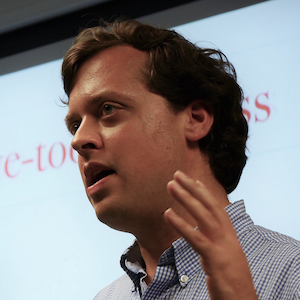
Evaluating Quality & Range of Text-to-Audio ModelsMark Nelson, Associate Professor,
Computer Science
Text-to-audio AI models take a text prompt as input and generate audio as output. For example, if you prompt "dramatic sound of breaking glass", the model ought to generate a few seconds of audio matching that description. If you prompt again, ideally it should produce audio that is different but still matches the description. The goal of this project is to evaluate the quality and range of such models' outputs for different types of audio. When you prompt for different kinds of sounds, does the result match the prompt, have high audio quality, and have variation within the category that isn't just reproduction of the training data? This is part of an ongoing project with collaborators, and there are various possible ways to contribute, e.g. focused more on code, more on data collection, or more on audio analysis.
- Project open to: First year students, sophomores, and juniors during the Fall 2026 semester.
- Required student qualifications: None
- Preferred qualifications: Some familiarity with Python is helpful.
- About Dr. Nelson
Finding Weird Galaxies
with Machine Learning Johannes U. Lange, Assistant Professor,
Physics
Astronomers have imaged hundreds of millions of galaxies in the Universe. One of the most surprising discoveries of the past few decades is the great diversity of galaxy properties and shapes. In this project, we will use basic machine-learning-assisted outlier detection to look through large galaxy catalogs and identify galaxies that deviate the most from the general population.
- Project open to: First-year students during the Fall 2026 semester.
- Required student qualifications: None.
- Preferred qualifications: None.
- About Dr. Lange
Leveraging Large Language Models to Combat Hate Speech in Social MediaNathalie Japkowicz, Professor,
Computer Science
The department of Computer Science at AU has been engaged, for several years, in a project seeking to combat hate speech in social media. Most of the work, so far, has involved machine learning and natural language techniques such as transformer models. Though we have, at times, had a look at Large Language Models (LLMs)' performance, we haven't, as of yet, given that approach a fair chance! The purpose of this research is to correct this and run systematic studies of LLM's performance on our tasks. We will consider different versions of ChatGPT, Gemini, Claude, etc., use various kinds of prompting strategies, model combinations, etc. to assess that technology's worth on our problem.
For information about our previous work, see Unmasking Antisemitism.
- Project open to: First year students, sophomores, and juniors during the Fall 2026 semester.
- Required student qualifications: Curiosity (and potentially some experience) in Large Language Model Technology
- Preferred qualifications: A High School or College course covering some AI/Language technology.
- About Dr. Japkowicz
Systematic Prompting of Large Language ModelsMichael Robinson, Professor,
Mathematics and Statistics
Some large language models (LLMs) are open source and are therefore fully open for scientific study. However, many LLMs are proprietary and their internals are hidden, which hinders the ability of the research community to study their behavior under controlled conditions. Because understanding the behavior of LLMs, proprietary or not, is essential for determining conditions under which they are appropriate for a given task, requiring model source code and "weights" to be in hand is a severe and potentially pervasive limitation. Surprisingly, "meaningless" prompts involving single tokens are quite effective as probes, and provably recover the internal topological structure of the model. Moreover, LLMs often respond to single token prompts in coherent and interesting ways that belie a general lack of "understanding" of the prompt on the part of the model.
- Project open to: First year students, sophomores, and juniors during the Fall 2026 semester.
- Required student qualifications: None.
- Preferred qualifications: Some programming language and statistical background./li>
- About Dr. Robinson

Talking across Worlds:
Intercultural Communication in Immersive AI Spaces Krisztina Domjan, Senior Professorial Lecturer,
Literature
Project 1
This interdisciplinary research project examines how immersive AI environments, including AI-driven simulations, including XR/VR role-playing, can facilitate the development of intercultural communication skills. Students will work with their faculty mentor to design, test, and evaluate virtual scenarios that reflect real-world intercultural interactions, such as navigating cultural norms, addressing misunderstandings, and adapting to diverse communication styles in academic, social, or professional contexts. Drawing on perspectives from fields such as computer science, anthropology, linguistics, and language learning, the project examines how immersive technologies support perspective-taking, empathy, and effective communication strategies. Students will also critically reflect on the ethical and cultural limits of using AI and immersive technologies to represent human identities and cultures. The project emphasizes responsible, human-centered AI use and collaborative inquiry.
- Project open to: First year students, sophomores, and juniors during the Fall 2026 semester.
- Required student qualifications: None.
- Preferred qualifications: Strong interest in at least one of the following areas is recommended: communication, intercultural studies, languages, anthropology, coding, gaming, and immersive media.
Project 2
This research project explores how interacting with AI tools, such as chatbots, shapes undergraduate students’ academic identity in an age of algorithmic engagement, where digital platforms often encourage passive use and outsourced thinking. Students will examine how working with AI influences attention, confidence, voice, authorship, and responsibility in academic communication. Through guided reflection, analysis of AI-supported writing or dialogue, and discussion, students will investigate whether AI functions as a tool for intentional learning, a collaborative partner, or a source of cognitive offloading. The project emphasizes responsible and ethical human–AI collaboration, helping students identify ways to use AI that support deep thinking rather than replace it. Students will gain hands-on experience with qualitative research while critically reflecting on their own learning habits and communication practices in AI-mediated academic environments.
- Project open to: First year students, sophomores, and juniors during the Fall 2026 semester.
- Required student qualifications: WRT-101.
- Preferred qualifications: Students should have an interest in communication, psychology, philosophy, anthropology, or technology, and be curious about how digital platforms influence thinking and academic work.
- About Dr. Domjan