
AU Economist Jon D. Wisman Discusses His New Book, Why We Must Work
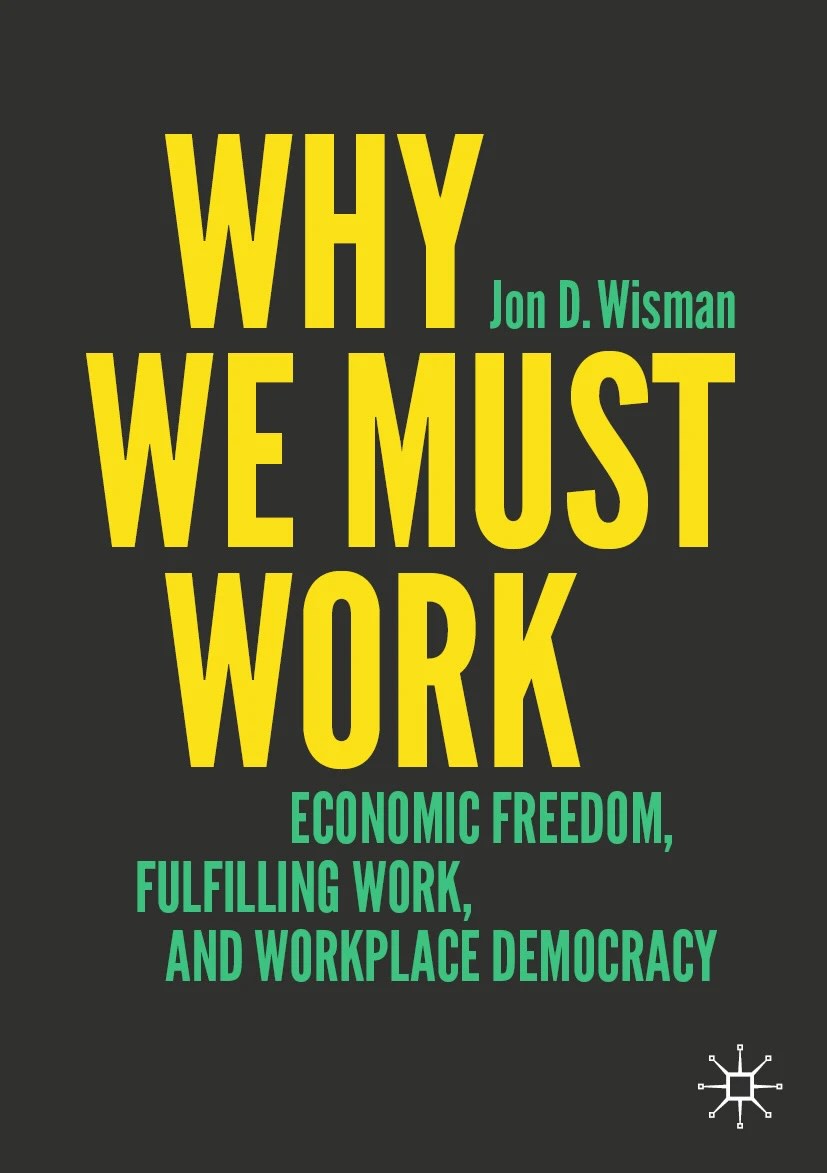
What makes work meaningful? In his new book, Why We Must Work: Economic Freedom, Fulfilling Work, and Workplace Democracy (Palgrave Macmillan, 2026), American University economist Jon D. Wisman argues that work can be a source of creativity, community, and human flourishing in addition to economic security. In his book, Wisman proposes two reforms—guaranteed employment and workplace democracy—as ways to make work more fulfilling, eliminate poverty, and expand worker participation while preserving private property and markets.
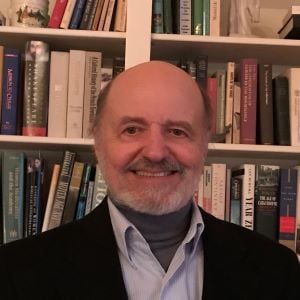
Wisman, a two-time Outstanding Teacher of the Year and the recipient of AU's 2023 Scholar/Teacher of the Year award, shares the ideas behind Why We Must Work and his vision for a more fulfilling future of work.
Many people think of work primarily as a source of income. Why do you believe work itself matters?
Today, most people generally view work as a means, at times unpleasant, to income with which to consume. Even the science of economics views work negatively, as disutility, that which requires a bribe in the form of income with which to consume. It is not broadly recognized that in addition to providing income, work can be a source of fulfillment, creativity, and community.
Our deep history makes it clear that work can be far more than a means to an end. Our species, Homo sapiens, evolved to experience work as pleasurable to motivate its performance and best ensure our survival. Anthropologists inform us that they likened work to play. We continued to experience work as pleasurable for the first 98 percent of our history when we lived as hunter gatherers and early agriculturalists. They didn’t suffer the threat of unemployment as their lands were public. They didn’t suffer being bossed about as there were no supervisors. When they worked with others, the usual case, they all participated in decision-making. Their work was democratic. Strikingly, to meet their basic needs, their workweek averaged between 12 and 20 hours, even in the most inhospitable lands such as the Kalahari Desert.
How, then, did it come about that work came to be viewed negatively?
Work was degraded from a prime life activity that was rewarding in itself and pleasant following the rise of the state about 5,500 years ago when warrior elites with metal weaponry and military organization took ownership and control of productive wealth, mostly in the form of land, and subjected all others to work for them to survive. Most have done so ever since as slaves, serfs, indebted peasants, and wage workers. Workers were generally robbed of their ability to participate in determining how work was to be carried out or the hours of work, which often became extremely long. The output they produced beyond their survival needs was taken by elites who owned and controlled productive wealth.
Today, most workers work for wages. They possess no ownership or control over productive wealth and thus they suffer the threat of unemployment. They work under often toxic managers with the power to boss them about and thus suffer humiliation in their workplaces. They are not free in their workplaces with little control over the work process or control over the hours of work.
Your book suggests reforms to make work again fulfilling, a vent for creativity and community. What are they?
My book proposes two reforms. One is guaranteed employment at living wages with benefits and reskilling where necessary. This would eliminate job insecurity and poverty while providing everyone with the social and self-respect of being a productive member of society. The second reform is to implement measures to bring about worker ownership and control of their firms. This would extend freedom and democracy.
Both reforms conform to and expand upon our cherished values of freedom and democracy by extending them from the political sphere to the sphere of work, while preserving capitalism’s two principal institutions of private property and markets. Thus, with these two reforms, the economic system would remain capitalist, but with greater freedom and democracy and less insecurity, stress, and inequality. As in the political sphere, no one would receive directives from someone they had not participated in democratically electing. It is noteworthy that these proposed reforms recapture critical aspects of the nature of work to which our species evolved: a world without unemployment and where no one is bossed about.
How about work in the future? What role do you see AI and robotization in all of this?
New technologies have raised fears of job displacement for more than 200 years. Yet as jobs have been replaced by new technologies, new jobs have continually emerged, leaving overall employment and unemployment rates relatively stable.
Of course, our future experience with AI could be different. Even so, new labor saving technologies should be celebrated, and this would be especially true if employment were guaranteed. Workweeks could be reduced for all workers and remaining work shared. No one would suffer from unemployment. The challenge is not with the labor-displacing technology which improves the quality of our lives, but with how we socially respond to it.
If the total amount of work were reduced, this raises the question of what might be the ideal workweek. Might it be the workweek to which we evolved of 12 to 20 hours a week—the workweek that endured for 98 percent of our history. Incidentally, in 1930, economist John Maynard Keynes predicted and celebrated that in a 100 years (four years from now), technological progress would have reduced the workweek to 15 hours.
Clearly, the pace of technological change is ever speeding up. This means that increasingly, the education and skills workers get when young will not suffice for their full working lives. Workforces will need ways to upgrade skills as earlier learned skills become outdated. The response proposed in my book is that a reskilling component be paired with a guaranteed employment program to address the needs of those who lose their jobs due to skill obsolescence.
What broader concerns led you to advocate for the reforms outlined in the book?
In today’s rich countries, we live in an absurd reality. We are rich beyond the dreams of past visionaries. In the United States, if income were equally distributed, a family of four would receive $290,000 annually. If equally distributed, these families would possess over $2 million in wealth. Yet despite this unparalleled abundance, we continue to pursue maximum economic growth. We are caught in a material progress vision whereby economic growth and ever greater consumption are viewed as that which will deliver greater happiness. But studies have revealed that this is a mistake, that above a fairly low threshold of income and wealth, further increases do not increase happiness. But we remain caught in a consumption arms race whereby people seek status through competitive conspicuous consumption. Rising inequality raises the bar ever higher, leading those with less income to increase their consumption to maintain their relative social status. The consequence of this ever-increasing consumption is that we are destroying our environment’s future capacity to sustain our well-being, if not our very existence. This is the urgency of the reforms proposed in my book.
These reform measures—guaranteed employment and workplace democracy—would substantially reduce the threat of ecological devastation. Guaranteed employment would do so by eliminating the need for economic growth to generate employment. Workplace democracy, by ennobling work and community, would reduce the reliance upon consumption as the principal means of seeking status. Economic growth could still be sought, but in ways that would not be detrimental to the environment, or could repair existing environmental damage.
These reforms would do much more than help preserve our environment. Guaranteed employment at living wages with reskilling where appropriate would reduce inequality, eliminate poverty, ensure that workers possess adequate skills, and provide all workers with the social and self-respect of being productive members of society. Workplace democracy would extend freedom and democracy to the realm of work, nourishing these values in the political sphere and in broader social life generally. By privileging work, these reforms would provide us with an attractive alternative vision of our future to that of endless economic growth and consumption.
What brought you to your study of work and the writing of this book?
My interest in the potential of work to provide meaning, creativity, community, and self-respect dates back decades. As an academic, I've experienced the benefits that secure, self-directed work can provide. At the same time, I have observed how many workers face insecurity, limited control over their work, and stressful workplace environments.
The question that came to occupy me is why, in today's rich societies, so many workers lack jobs where they can flourish and what might be done to rectify this. My book has been my attempt to answer those questions.